
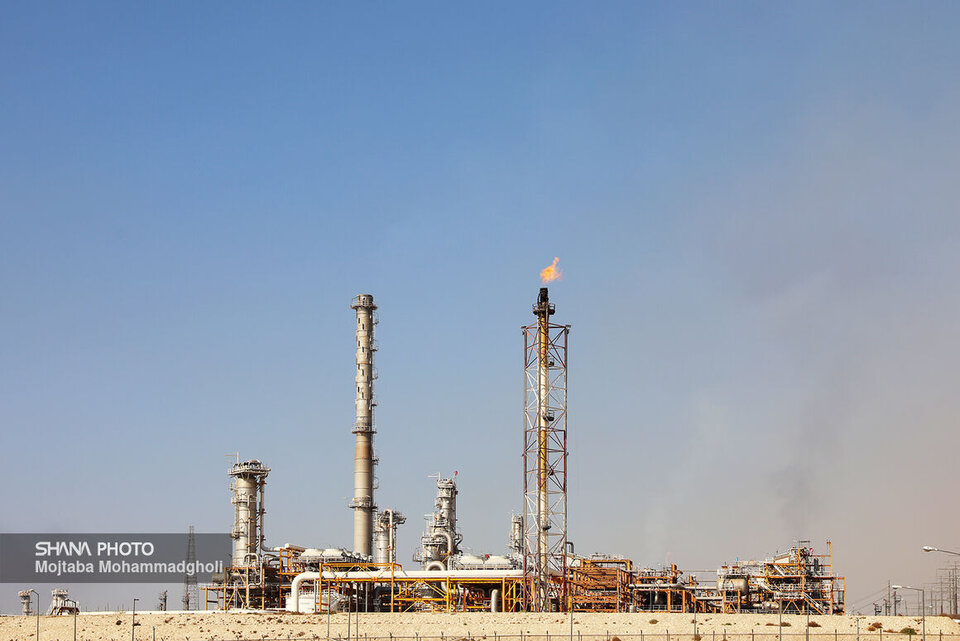
Mohammad Seifi, manager of the refinery, said the first phase of the project allows for the daily recovery of 1.4 million cubic meters of flare gas, according to the South Pars Gas Complex Company.
Seifi called the initiative a strategic effort to recover flare gas, protect national resources, reduce environmental pollutants and optimize energy consumption.
Beyond preventing the burning of valuable gas in flares, the project marks a significant step toward improving energy efficiency and advancing the flare-reduction policies of Iran's Oil Ministry and the National Iranian Gas Company, he said.
On the technical side, Seifi said the project included the construction of 2,800 meters of 12-inch pipeline, along with control valves and auxiliary equipment.
Construction took 76 days and more than 28,200 person-hours of specialized work across piping, instrumentation, civil engineering, electrical systems, process design, safety and operations, he said. The pipeline entered service on May 25, 2026.
The first-phase transfer capacity stands at 1.4 million cubic meters per day and will increase in stages depending on demand and consumption levels at Petropalayesh Kangan, Seifi said.
He added that the project would play an important role in cutting greenhouse gas emissions, improving air quality in the operational area, boosting energy efficiency and supporting the oil and gas industry's sustainable development and environmental goals.
Your Comment