

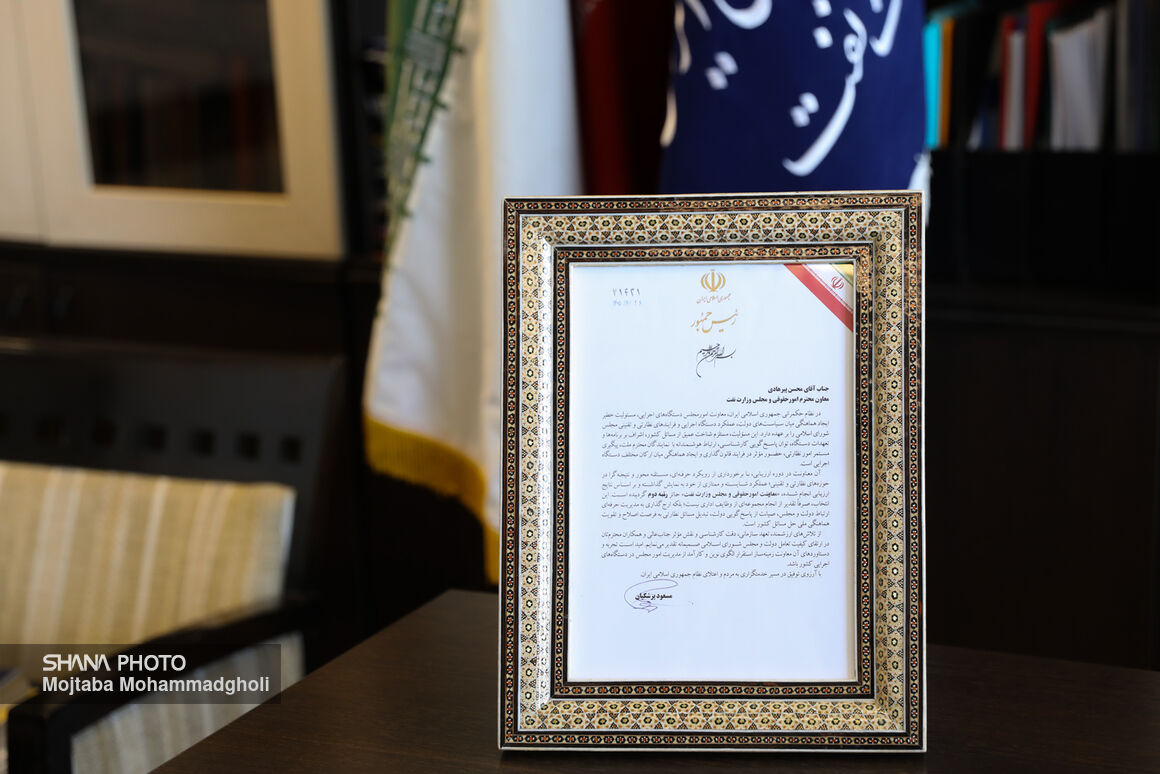
Gholamreza Shahkarami said the awards ceremony for top-performing agencies was attended by the president, and that President Masoud Pezeshkian commended the ministry for its second-place finish.
The Presidential Office for Strategic Affairs and Parliament organized the event, Shahkarami said. The assessment measured performance indicators for agencies' parliamentary affairs offices, including implementation of government policies, support for the legislative process and oversight of how parliamentary laws are carried out.
He credited the ranking to the efforts of the oil minister, deputy ministers, managers and employees across the industry.
Shahkarami said the oil minister played a key role by attending Parliament floor sessions and specialized committee meetings on time and by answering lawmakers' questions. He also cited support from deputy ministers and the heads of major and subsidiary companies in oil, gas, petrochemicals and refining and distribution.
He singled out Mohsen Pirhadi, the ministry's deputy for legal and parliamentary affairs, for special praise, saying the result was due to Pirhadi's leadership and that of his team, particularly on oversight and legislative matters.
Shahkarami also thanked the ministry's public relations director general for covering the oil minister's meetings with parliamentary committees and lawmakers, and for reporting on lawmakers' visits to oil and gas facilities in operational areas.
The ministry has performed well in responding to lawmakers' demands while following the Parliament's internal rules and the regulations governing government-parliament relations, Shahkarami said, resulting in maximum cooperation between the two branches. He said reaching that standing requires understanding the country's major issues, overseeing agencies' plans and commitments, and working steadily to meet them.
Shahkarami said the oil industry has always been a driver of government economic activity. He said the oil minister's leadership, along with the industry's workers, made a unique contribution to ensuring stable fuel supplies despite economic sanctions, the 12-day war and the third war. Workers, especially in operational zones and South Pars, worked around the clock on the front line of what he called the economic war, he said.
Your Comment