
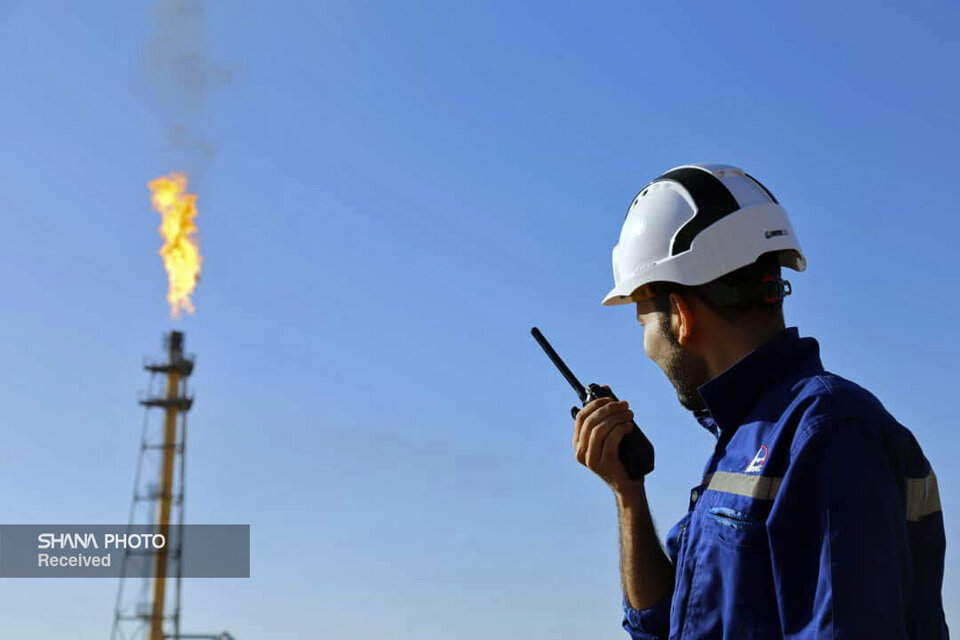
Mohammad-Taqi Jafarzadeh described the measures to speed up flare reduction projects. He said that after the president's order to the Department of Environment and the Oil Ministry, efforts were made to review these projects faster and to cut the usual administrative procedures.
Referring to the permits issued over the past seven to eight months, he said most of these projects are small and that private-sector capacity has also been used to carry them out.
The deputy for environmental protection of the Oil Ministry's HSE Directorate General expressed hope that, once the projects under way in operational areas are completed, some flares will be extinguished in the near future.
According to Jafarzadeh, the projects for Kopal and several gas refineries are also progressing, with investors having entered the projects and the relevant contracts signed.
Expanding Associated Gas Collection Projects
Referring to the environmental effects of associated gas collection projects, he stressed that, beyond reducing environmental impacts, these projects help collect and use associated gas and prevent the waste of these resources.
He expressed hope that, through the planned programs, the volume of gas sent to flares and the effects of burning it in the oil industry will gradually decline.
Public Participation in Environmental Assessments
Describing the responsibility of the Oil Ministry HSE Directorate General's environmental protection deputy for the environmental consequences of oil activities, Jafarzadeh stressed that the Oil Ministry's mission is to develop the oil industry. The deputy's office, he said, is tasked with minimizing the negative effects and consequences of that development.
Referring to the environmental impact assessment guidelines in the oil industry, he explained that they cover three areas: oil field development, linear projects such as pipelines, and point projects such as refineries and petrochemical complexes.
Stressing the need for public participation in environmental assessments, the deputy said participation is mandatory in this process. The relevant guidelines have been issued after approval by the Department of Environment, so all oil industry projects must include public participation in the environmental impact assessment process.
Jafarzadeh noted that if environmental considerations are not fully observed in the implementation of projects, part of the responsibility lies with the Oil Ministry HSE Directorate General's environmental protection deputy.
Your Comment