
To manage the natural gas imbalance and reduce consumption across sectors, the Oil Ministry introduced a new mechanism called "energy service companies" last year (1404). Under this model, the companies work with the private sector to cut gas use among small and large consumers by carrying out optimization projects. Their activity covers the household, commercial, industrial and agricultural sectors and includes correcting consuming equipment, upgrading technology, installing smart systems and managing consumption. The National Iranian Gas Company (NIGC) is responsible for implementing the program.
By carrying out consumption optimization projects, energy service companies help reduce the natural gas imbalance and direct gas resources to productive industries. They also lower subscribers' bills, improve equipment efficiency and cut environmental pollutants.
Gas optimization programs were pursued before these companies came in, within NIGC's own missions and activities. Since last year, with the energy service company model in place, part of these programs has entered a new phase through the participation of the companies and the private sector.
Upgrading and Smartening Boiler Rooms
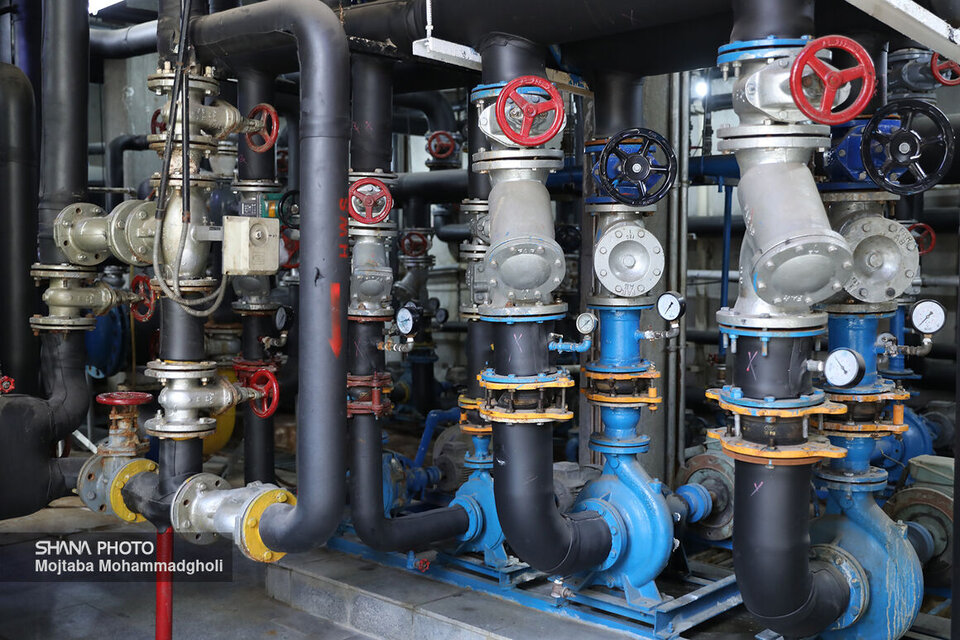
Upgrading boiler rooms is one of the main axes of gas reduction programs in the building sector. By tuning combustion equipment, optimizing boilers and improving heating system performance, these measures cut fuel use and raise equipment efficiency.
A review of performance shows that 9,954 boiler rooms were upgraded in 1405 (2026).
By province, Isfahan, Razavi Khorasan and East Azarbaijan had the highest numbers of upgraded boiler rooms.
Alongside equipment upgrades, smart controls for boiler rooms are being expanded to control temperature more precisely, schedule heating system operation, and prevent unnecessary consumption. The number of smart systems installed was reported at 1,500 units in 1404 and 2,815 units in 1405. Projected annual savings from the systems installed in 1405 are estimated at 8,276,100 cubic meters.
South Khorasan, Kurdestan and Mazandaran are the three provinces with the most smart-equipped boiler rooms. In addition to cutting consumption, these systems allow continuous monitoring of equipment performance and better management of operating conditions.
Replacing Heating Equipment and Improving Consumption in Buildings
Replacing worn-out heating equipment with high-efficiency equipment is another important axis of gas optimization. Old heaters waste a significant share of the energy they consume because of their low efficiency. Replacing them with efficient, standard heaters, while observing safety principles, can reduce buildings' gas use.
Optimizing building consumption is not limited to swapping equipment. Improving insulation, replacing unsuitable windows, sealing gaps, tuning heating systems and keeping to comfort temperatures all help cut use. Schemes such as "Warm Homes" follow this approach by identifying high-consumption subscribers and correcting the thermal conditions of their buildings.
Optimizing Consumption in Industry
Industry has considerable capacity for energy service company projects. Correcting combustion equipment, replacing old technologies, recovering heat and improving production processes can hold down gas use without reducing product quality or capacity.
A major example is the brickmaking industry. In traditional kilns, much of the energy consumed is lost because of poor design and heat leakage. Using tunnel and roller kilns, improving insulation and closely controlling the firing process can cut fuel use and raise product quality. Optimization in the steel, tile and ceramics, cement, gypsum and lime industries can also be pursued by correcting burners, recovering heat and upgrading equipment.
Another example of the program is gas optimization in traditional bakeries. According to the announced results, replacing used direct-flame machines with standard indirect-heat units delivers savings of at least 50 percent, while replacing polluting, low-efficiency clay ovens delivers at least 75 percent. In bakeries, correcting baking systems and using higher-quality equipment are among the ways to cut gas use. The companies' role in this sector is to identify units with savings potential, supply the needed capital, and implement solutions suited to each unit's type of activity.
Optimizing Consumption in Agriculture
Greenhouses and poultry farms are other areas suited to gas optimization. In greenhouses, improving covering and thermal insulation, upgrading heating systems, tuning burners and controlling ambient temperature can prevent energy waste. Choosing equipment suited to the climate and crop type helps reduce the need for heating.
In poultry farms, managing house temperature, correcting heating equipment and using smart control systems can lower gas use while maintaining suitable growing conditions. These measures matter most in units with old equipment or in cold regions.
According to an NIGC report, contracts have so far been signed with 111 energy service companies. NIGC Managing Director Saeed Tavakoli has projected that savings from contracts signed with these companies will exceed 1 billion cubic meters by year-end.
Under the planned program, 2,337,084 cases in the household sector, 7 in the power plant sector, 2,283 in agriculture (greenhouses and poultry farms), 609 in industry, 5,329 in the commercial sector (bakeries and restaurants), and 19,938 in other sectors, including mosques and government premises and facilities, have been defined.
Overall, gas optimization programs built on the participation of energy service companies, correction of worn-out equipment, smart heating systems and technology upgrades seek to reduce energy waste and raise efficiency. Besides lowering consumers' costs and environmental pollutants, these projects can free more natural gas to meet the needs of industry and productive sectors. Achieving the projected savings of more than 1 billion cubic meters by year-end depends on the continued implementation of these programs, private-sector participation and consumer cooperation, a path that can be an effective step toward managing the gas imbalance and moving toward optimal energy use.
Your Comment