
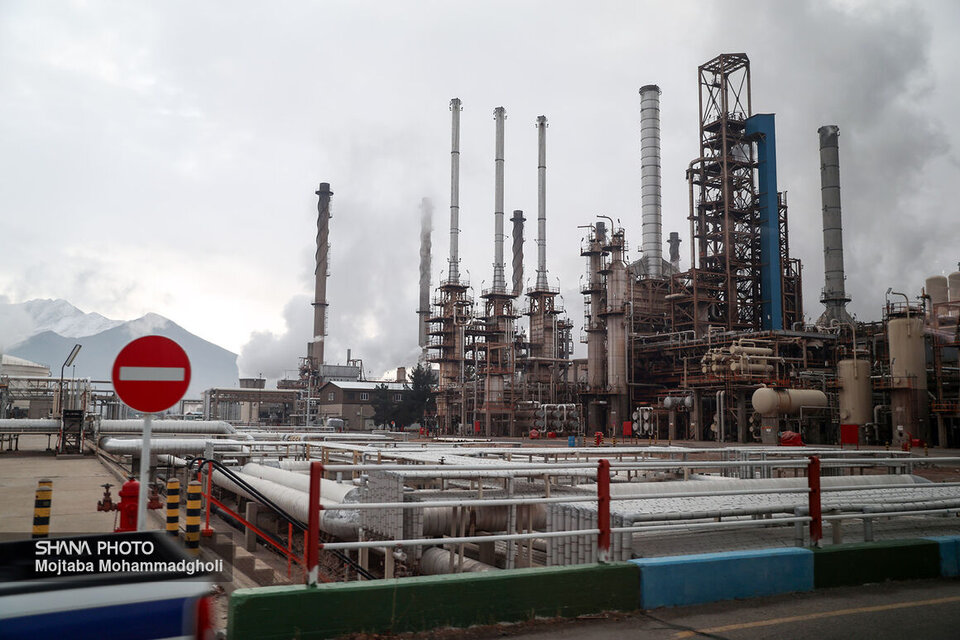
Ezzatollah Gholami said Tuesday, on the sidelines of a media tour of the refinery, that the facility processes about 265,000 barrels of crude oil per day and has consistently pursued improvements in product quality and operational efficiency. He said the refinery’s high level of complexity—stemming from newly built units and completed development projects—places it among the most sophisticated in the country.
Gholami said roughly 30% of crude oil feedstock typically converts to fuel oil, but the construction of new units at the Shazand complex has cut that share to 15%. He said plans are in place to reduce it to 7% and ultimately eliminate fuel oil output altogether.
Higher Capacity Brings Strong Returns
Gholami said the refinery’s gasoline-producing RFCC unit is one of the largest in the Middle East, producing about 8 million liters of gasoline per day, 1,500 metric tons of liquefied petroleum gas and 500 metric tons of propylene for petrochemical companies. He said the capacity increase has delivered significant profitability for the country.
He also said the largest refinery overhaul ever carried out in Iran was recently completed at the Shazand complex. The three-month overhaul included refurbishing multiple units, substantially boosting capacity and improving product quality.
Gholami said one of the refinery’s most important recent achievements is the production and supply of ATR 140, a low-sulfur fuel oil used in line with environmental standards for marine fuel. He said the product has now been distributed to power plants nationwide to help curb emissions.
Your Comment