
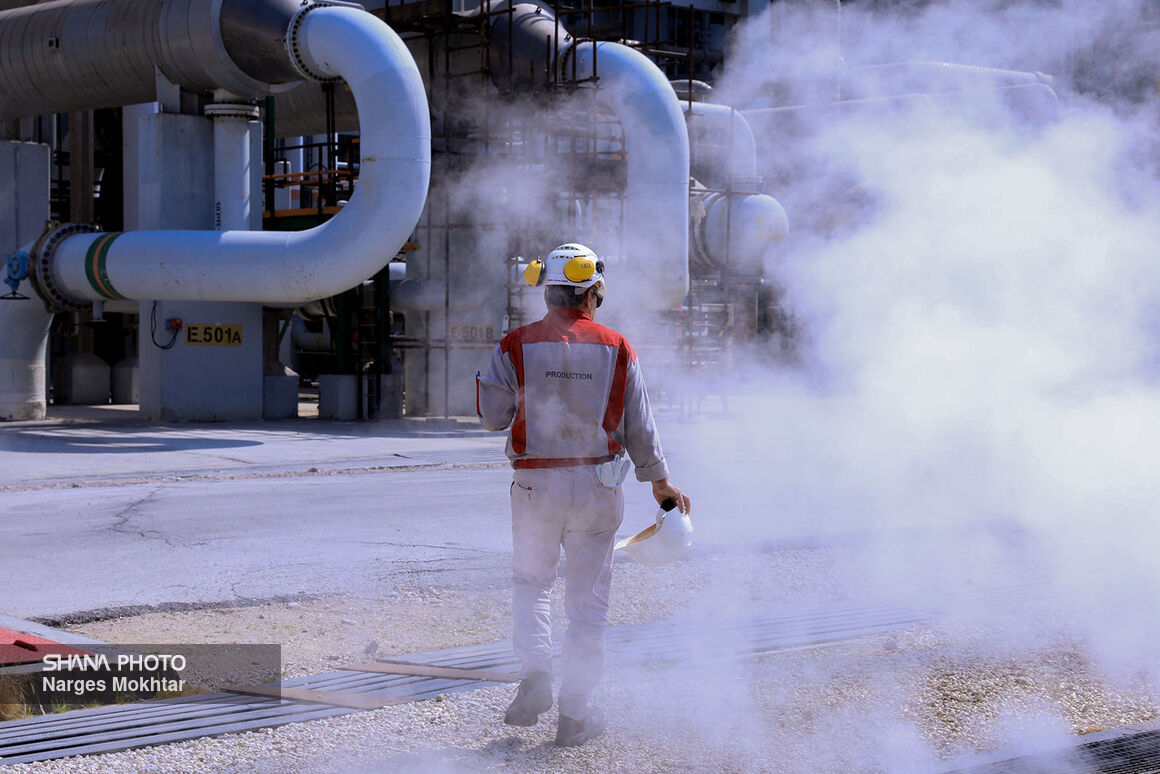
The petrochemical industry’s approach to energy has gone beyond simply reducing consumption at production facilities. Three main areas have been pursued: optimizing energy use within petrochemical plants, diversifying the industry’s energy mix, and participating in energy-efficiency projects outside the petrochemical sector. The approach has shifted the industry from being primarily an energy consumer to becoming an active player in energy management and energy-efficiency investment.
Over the past year, energy-efficiency projects at petrochemical facilities have saved more than 120 million standard cubic meters of natural gas. At the same time, investment opportunities in renewable energy have been identified, with steps taken toward operating renewable power plants with a combined capacity of more than 650 megawatts. Plans have also been developed for investments in projects with a total capacity exceeding 10,000 megawatts.
The industry has also expanded its efforts beyond production facilities by participating in a campaign to reduce energy consumption by 10%. The initiative targets household, public and commercial consumption and seeks to lower energy use without imposing additional costs on households, primarily through changes in consumption patterns and greater public awareness.
These measures indicate that energy management in the petrochemical industry has evolved beyond an operational concern. Over the past two years, it has become a strategic priority for reducing energy intensity, maintaining production, cutting opportunity costs, diversifying energy sources, expanding renewable power and helping address the country’s energy imbalance.
More Than 120 mcm of Gas Saved
Energy-efficiency measures in the petrochemical industry have produced significant results in recent years. Besides reducing energy consumption and improving operational efficiency, the projects have contributed to lower environmental emissions.
Monitoring data show that the industry saved more than 120 million standard cubic meters of natural gas over the past year. The figure reflects the impact of planning and implementing a range of energy-efficiency projects across the sector.
The savings have reduced energy costs and improved the competitiveness of petrochemical facilities while creating new opportunities to generate economic value from resources saved by the industry and the broader economy. The petrochemical sector has consequently strengthened its position among Iran’s leading industries in meeting energy-consumption standards.
Diversifying the Energy Mix
As part of its sustainable development strategy, Iran’s petrochemical industry is pursuing broader diversification of energy sources, higher efficiency and lower dependence on fossil fuels. The effort goes beyond statutory requirements and is intended to give the industry a more active role in the energy transition.
Following the identification of investment opportunities, steps have been taken to develop renewable power plants with a combined capacity of more than 650 megawatts. Planning is also underway for investments in renewable projects exceeding 10,000 megawatts in capacity.
Proposals have been put forward to facilitate private-sector investment, use electricity-market mechanisms and introduce financial and economic incentives. If approved, the measures could accelerate implementation of renewable-energy projects.
Petrochemical Industry Takes Energy Savings Beyond Its Plants
Growing energy demand across the economy and the need for a stable supply of petrochemical feedstock have encouraged the industry to expand its energy-efficiency efforts beyond its own production units.
One important initiative is the Energy Pulse campaign, under which petrochemical companies participate in efficiency projects through gas service providers. The gas saved through those projects is allocated to participating petrochemical companies in the form of gas certificates.
The program was initially launched in the northern provinces of Mazandaran, Golestan and Gilan before being expanded to other provinces.
10% Reduction Campaign Promotes Smarter Consumption
The campaign to reduce energy consumption by 10% was designed to cut consumption without imposing additional costs on households or reducing living standards. It focused on promoting responsible energy use and providing consumers with simple, practical ways to reduce consumption.
More than 480,000 gas subscribers participated in the campaign, which focused on areas experiencing gas-pressure shortages. Because some gas connections serve multiple households, the initiative ultimately reached more than 1 million households.
The campaign also generated significant financial and social benefits. More than 340,000 new users registered on the program’s platform. Energy credits worth 22 billion tomans were issued to subscribers, while more than 50 billion tomans was credited to users’ digital wallets and 19.5 billion tomans in cash was paid based on their participation. More than 100 billion tomans worth of high-efficiency equipment was also awarded.
Social rewards included equipment to help protect the Hyrcanian forests from invasive species, 400 school bags and stationery sets for beneficiaries of the Imam Khomeini Relief Foundation and State Welfare Organization, 295 wheelchairs for children waiting for assistance, and equipment for teams working to restore burned areas of the Zagros forests.
Individual rewards included 2,900 high-efficiency heaters, 20,600 one-million-toman cash prizes, three one-billion-toman prizes, 20 100-million-toman prizes and 150 loans of 150 million tomans each for upgrading boiler-room systems.
New Investment Opportunities for Petrochemical Companies
As part of the industry’s cooperation with other sectors, energy-efficiency opportunities have been identified in areas including power-plant efficiency, agricultural energy use, residential and office buildings, small and medium-sized industries, and consumer behavior.
Some of these projects have entered the implementation stage, creating opportunities for petrochemical companies to invest outside their traditional operations. Participating investors can benefit from the equivalent value of the gas saved, based on the applicable tariff at the source of the savings.
The approach turns energy savings from a purely consumption-related objective into an economic opportunity. Instead of being wasted or used in low-efficiency applications, saved gas can be redirected toward production and higher-value economic activities.
Four Agreements Expand Energy-Efficiency Cooperation
Several cooperation agreements have been signed between the National Petrochemical Company and other institutions to advance energy-efficiency projects.
One agreement with Iran’s Thermal Power Plants Holding Company focuses on reducing fuel intensity and improving efficiency at power plants, particularly by increasing the efficiency of thermal power generation and reducing energy losses.
Another agreement with the Ministry of Education’s Secondary Education Department covers training for employees, teachers and students as well as the implementation of energy-efficiency projects. Its objective is to promote responsible energy use and establish efficient consumption habits among future generations.
An agreement with Sharif University of Technology covers research, training and implementation of energy-efficiency projects. A separate agreement with the National University of Skills seeks to expand training and energy-efficiency projects nationwide.
Cooperation has also been established with the Tehran Municipality to promote a culture of responsible energy consumption.
From Energy Consumer to Energy Manager
The petrochemical industry’s performance over the past year shows that energy management under the 14th administration has moved beyond a purely operational and industry-focused issue to become a strategic priority.
The approach combines lower consumption, higher efficiency, production sustainability, energy diversification and participation in efforts to address Iran’s energy imbalance.
Saving more than 120 million standard cubic meters of natural gas within the industry, moving toward renewable power generation with more than 650 megawatts of capacity, planning investments in projects exceeding 10,000 megawatts and participating in energy-efficiency programs across other economic sectors illustrate the scale of the strategy.
The 10% energy-reduction campaign is a notable example. It brought the petrochemical industry together with household, commercial and public consumers, seeking to unlock energy-saving potential through public awareness, changes in consumption patterns and investment.
The experience of the past two years shows that energy management in the petrochemical industry is no longer simply about consuming less. It is increasingly about consuming energy more efficiently and turning savings into opportunities for investment, production, social responsibility and value creation.
Continued progress will require cooperation and support from policymakers, decision-makers and implementing institutions. Greater coordination could help advance national energy goals, improve environmental performance, raise efficiency and strengthen the strategic role of the petrochemical industry in Iran’s economy.
One of the notable achievements of the 14th administration in the petrochemical sector, therefore, has been the shift in energy management from a cost-generating obligation to an opportunity for efficiency, investment and sustainable development. If the approach continues and supporting mechanisms are strengthened, the petrochemical industry could play an increasingly important role in addressing Iran’s energy imbalance.
Your Comment