
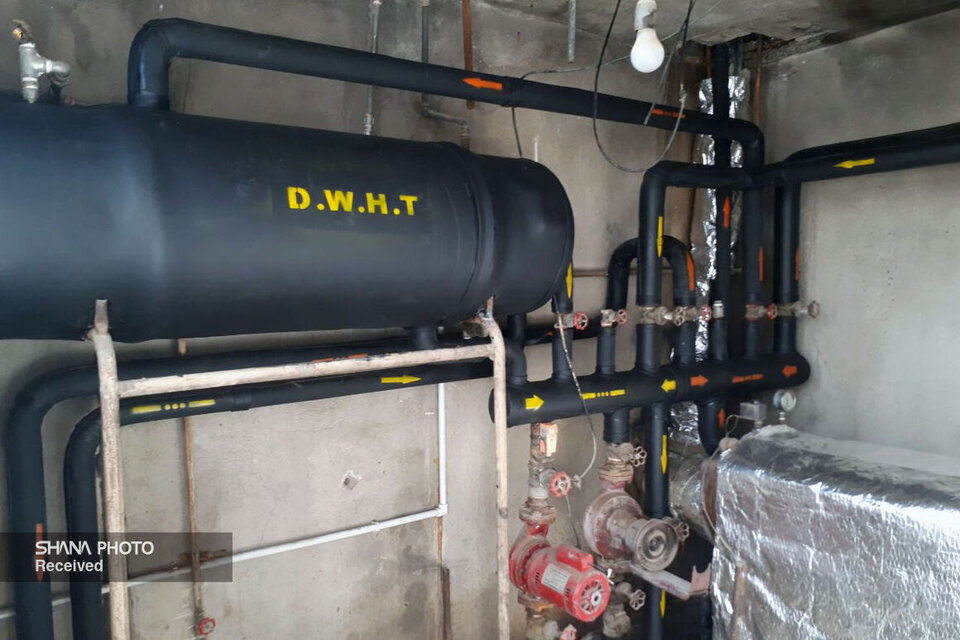
Launched in 2020 under a directive from the Economic Council, the initiative expanded NIGC’s mandate beyond gas processing, transmission and distribution to include consumption optimization. The first phase focused on improving the efficiency of central heating boiler rooms in residential, commercial and public facilities.
Under the program, natural gas customers operating central heating systems receive free technical assessments and financial support for upgrades. The project includes burner servicing and adjustment, insulation improvements, installation of magnetic anti-scale devices, and other measures designed to increase thermal efficiency and reduce energy consumption.
In 2022, the scope of the program was broadened, increasing the number of approved optimization solutions from three to nine and allowing NIGC greater flexibility in implementing efficiency projects within subsidy limits approved by the Economic Council.
According to NIGC CEO Saeed Tavakoli, 125,800 boiler rooms have been upgraded nationwide since 2021. The resulting gas savings have reached 739.7 million cubic meters, reflecting strong public participation and growing demand for efficiency improvements.
Provincially, the strongest performance in boiler room retrofits was recorded in the provinces of Isfahan Province, Razavi Khorasan Province and East Azarbaijan Province.
NIGC has also expanded the program to include smart boiler room systems, which automatically adjust operations based on outdoor temperatures and programmed schedules. The technology optimizes the performance of boilers, pumps and burners through sensors and advanced control algorithms.
Following the development of national standards for smart boiler systems in cooperation with regional gas companies and academic institutions, the smartization project was formally launched. In 2025 alone, 1,500 boiler rooms were equipped with smart control systems.
The company said the program also creates opportunities for private investment through energy-saving certificates that can be traded on Iran’s energy exchange, providing investors with a mechanism to recover project costs while supporting national energy-efficiency goals.
Your Comment