
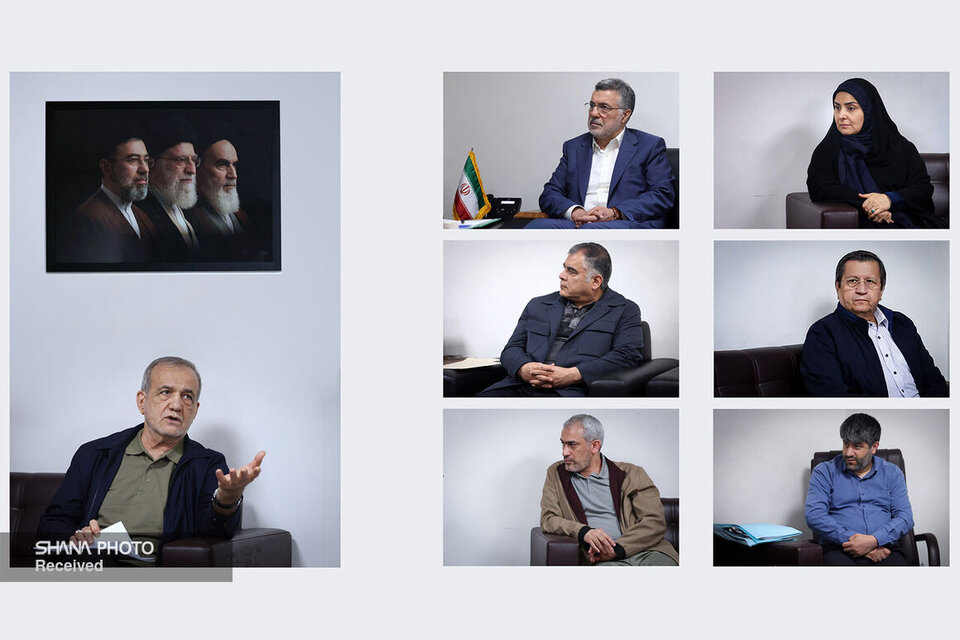
According to president.ir, the directive was issued during a high-level coordination meeting on securing essential goods, medicine supplies and alternative import routes. The session was attended by the oil minister, other economic ministers, the governor of the Central Bank of Iran and senior officials from relevant agencies.
Officials stressed the need to fully mobilize the country’s logistical, commercial and economic diplomacy capacities to preserve market stability and ensure continuity in supply chains.
The meeting reviewed the latest status of imports and supplies of essential goods, pharmaceuticals and key production inputs in light of restrictions affecting some southern border crossings and ports. Executive agencies presented reports on measures taken to manage the situation and establish alternative transportation and import routes.
Economic ministers said that negotiations and coordination with neighboring countries had helped activate and strengthen a significant portion of land border crossings and alternative transportation corridors, allowing the continued flow of essential imports into the country.
Pezeshkian emphasized the need for smart market management to prevent price shocks and instructed the Agriculture Ministry to adopt forward-looking planning to minimize the impact of import restrictions on the prices of essential goods and medicine.
The president also called for maximum use of Iran’s northern ports and the development of alternative trade corridors through neighboring countries, including Pakistan, Russia and Azerbaijan, for the supply and import of key goods. He urged officials to accelerate the implementation of related agreements.
In addition, Pezeshkian instructed the Agriculture Ministry to establish specialized task forces for each commodity group to avoid overlap, fragmented decision-making and delays in identifying supplier countries and completing procurement and import processes.
He also emphasized stronger coordination with the private sector to encourage the use of alternative transportation routes and supply channels, calling for closer cooperation between the government and businesses in managing current conditions.
The meeting further examined the feasibility of importing pharmaceuticals and other vital goods from China through rail routes and highlighted the need to strengthen multimodal transportation infrastructure and improve the resilience of Iran’s supply chains.
Pezeshkian said the Foreign Ministry should make greater use of the country’s economic diplomacy capacities to facilitate the purchase, transport, customs clearance and delivery of essential goods and medicine.
“If necessary, I will personally consult with the leaders of neighboring countries and regional partners to remove any obstacles to the supply and transfer of essential goods and medicine as quickly as possible,” he said.
The governor of the Central Bank of Iran also presented a report on foreign currency allocations and financing for essential imports, stating that there were currently no problems in funding imports of essential goods and pharmaceuticals and that financial support would continue uninterrupted.
Your Comment