
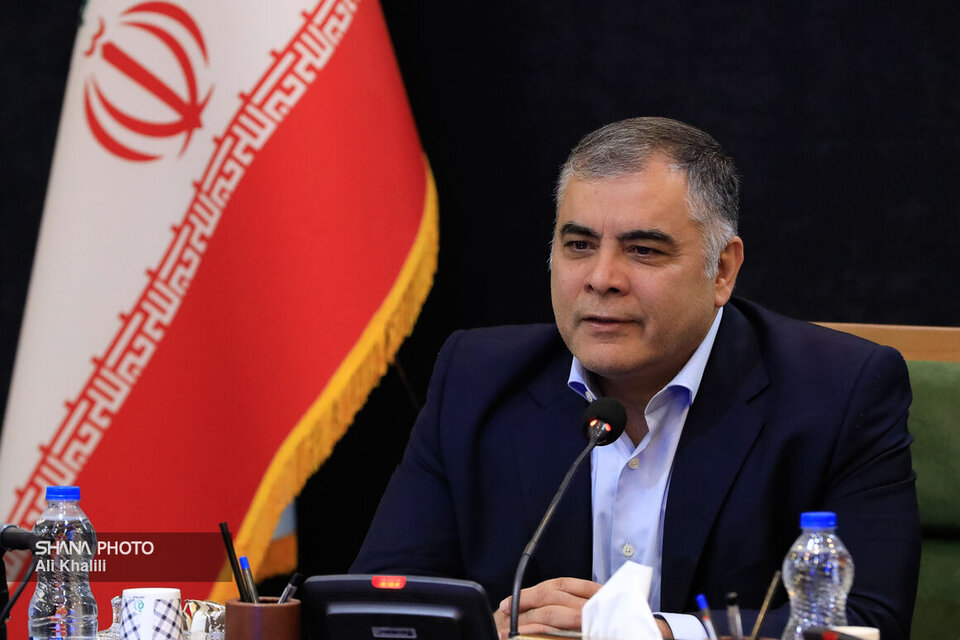
Mohsen Paknejad made the remarks Saturday during a meeting of the ministry’s deputy ministers, where officials reviewed issues and obstacles related to implementing Clause (B) of Article 15 and underscored the importance of speeding up its execution.
Referring to the outlook for the oil industry, Paknejad said the ministry has set a clear course to achieve its goals under the 14th administration and will remain committed to those objectives through the end of the government’s term.
He said the Ministry of Petroleum is viewed by national authorities as being on the front line of the economic arena, noting that officials have consistently recognized the efforts of oil industry managers and workers. At the same time, he said expectations for the ministry to help accelerate economic growth remain high.
Seventh Development Plan a Pact of the 14th Administration
Paknejad pointed to the ministry’s existing capacities and said its capabilities should be used to develop a roadmap and solutions to address challenges in implementing the Seventh Development Plan. He said the best structure for exploration, development and production exists within the National Iranian Oil Company, adding that solutions for implementing Clause (B) of Article 15 can be found within the oil sector.
Emphasizing that the Seventh Development Plan is a pact of the 14th administration, he said time and energy must be focused on carrying it out to smooth the path for national development and economic growth. Achieving the plan’s targets, he added, would lead to higher oil and gas production and strengthen the country’s economic support base.
Paknejad said that while the oil industry has capable managers and experts, greater private-sector participation could help boost motivation. He added that implementing Clause (B) of Article 15 would create opportunities for skilled young professionals who lack incentives to join the public sector, enabling them to enter the oil industry.
Need for a Roadmap to Implement Article 15
The oil minister cited the strong engineering and legal structure of the National Iranian Oil Company, saying it has the capacity to design appropriate contracts that account for oversight mechanisms and private-sector participation while preventing unsuccessful companies from entering the industry and ensuring a competitive environment.
He said the contracts must ultimately benefit the National Iranian Oil Company and stressed that how they are implemented is critical. Paknejad said he is personally committed to following through on the implementation of Article 15 to its final stage and called for a detailed roadmap to be developed at future meetings.
What Clause (B) of Article 15 Says
Under Clause (B) of Article 15 of Iran’s Seventh Five-Year Development Plan, the Ministry of Petroleum is required to use the legal capacities of the National Iranian Oil Company and competitive mechanisms—such as issuing licenses under the 2012 law defining the ministry’s duties and authorities—to assign development, exploration and production activities in oil and gas fields, particularly shared and gas fields, to the National Iranian Oil Company and qualified applicant companies.
The provision stipulates that ownership and sovereignty over resources will not be transferred. It requires that by the end of the third year of the plan’s implementation, at least 2% of the country’s oil production capacity, and by the end of the plan at least 5%, be offered to qualified non-state companies. The quota for boosting gas production is set at double that for oil.
Your Comment