Speaking about the goals behind the "Energy Pulse" (Nabz-e Energy) campaign, Ali Rabbani said: The campaign was launched to raise public awareness of the value of energy and to introduce ways of reforming consumption patterns, so that by managing consumption in sectors that generate lower added value, the country can avoid wasting resources and economic opportunities.
Noting that a five-year target has been set for the program, he added: The aim is to bring 10 percent of subscribers in the country's cold and temperate regions, or more than 2.2 million subscribers, into the Energy Pulse campaign. This figure, however, represents only the visible part of public participation, because many people change their consumption behavior after learning about the reform measures without formally joining.
Campaign membership: about 532,000 users
Announcing that 531,777 users are currently members of the Energy Pulse campaign, the NPC's head of energy consumption optimization said: The membership target for the campaign's second year was 500,000 users, and for the third year, which began in September (Shahrivar) this year, it is one million users.
On the scale of investment in energy efficiency projects this year, Rabbani said: 2,000 billion tomans is the minimum investment expected for implementing efficiency projects outside the petrochemical industry under the Energy Pulse framework.
He continued: The petrochemical industry has 84 efficiency projects within the industry, and over the past four years these projects have saved 1.8 billion cubic meters of gas.
Twelve efficiency projects outside the industry
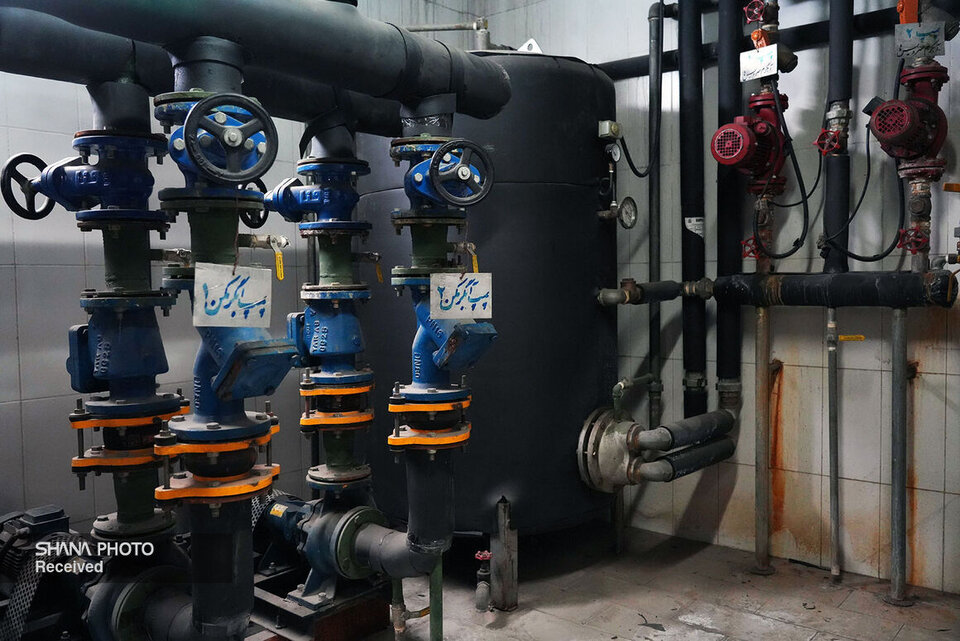
Saying that 12 efficiency projects are currently under way outside the industry, with the Energy Pulse campaign itself among them as a culture-building and awareness initiative, he said: We have 11 projects on the agenda in the area of equipment improvement and efficiency upgrades. These include reducing consumption in power plants, buildings, boiler-room systems, the brick industry, bakeries, and sports, cultural and hospital facilities.
Rabbani said: As an example, the upgrading of the facilities at Zareh Sari Psychiatric and Burns Hospital is under way with an investment of about 40 billion tomans.
On the funding earmarked for public participation, he added: This year, at least 600 billion tomans in prizes has been set aside for the public in the social, individual and equipment categories. A further 200 billion tomans has been allocated for other costs. These funds can grow in line with rising participation and the amount of energy saved, and the campaign's budget has no fixed ceiling.
The campaign's impact must be judged by consumption behavior
The NPC's head of energy consumption optimization stressed: It is estimated that the number of people who follow and apply the campaign's recommendations without formally joining is more than twice the number of registered members. The campaign's real impact should therefore not be measured only by the number of registrants; changes in consumption behavior and reduced energy waste are also important results.
Pointing to the widening participation of various agencies and organizations, Rabbani said: Over the past two years, through the synergy of two state institutions, the National Petrochemical Company and the National Iranian Gas Company, petrochemical companies have taken part in the scheme as investors, and provincial gas companies have also joined us.
He continued: A considerable number of organizations and universities across the country have lent their support, including Sharif University of Technology and the Tehran Municipality. The result of this cooperation has been synergy among agencies and sectors in developing and carrying out efficiency programs.
Creating benefits without burdening the government
Stressing that one of the features of the Energy Pulse campaign is that it creates economic and social benefits without imposing direct costs on the government, the NPC's head of energy consumption optimization said: By cutting energy waste, people not only enjoy the benefits of reformed consumption but also take part in social projects. For example, under a memorandum of understanding with the Ministry of Education, teachers and students are taking part in the campaign, and part of the resources generated from participation and savings is allocated to upgrading heating systems and making schools smarter.
Rabbani added: About 300 schools have been upgraded under this program so far, using public participation and the contributions of students' parents. In effect, part of the benefit from reduced energy waste is directed toward improving educational infrastructure.
On cooperation with the Tehran Municipality, he said: The municipality provides the necessary infrastructure to the campaign and draws on its staff and organization for outreach. On this basis, upgrading 500 Tehran Municipality buildings has been put on the agenda without placing a financial burden on the municipality. The result of this cooperation will be improved energy consumption in municipal buildings and lower bills.
Lower costs from reduced energy waste
Speaking about the economic effects of these measures, the NPC's head of energy consumption optimization said: Cutting the costs of energy waste can free up resources for developing urban services. Instead of paying for unnecessary energy consumption, these resources can be used to pave streets, add buses to the public transport fleet or increase the number of metro cars. Beyond helping improve the management of public resources, this approach also improves environmental conditions and reduces pollutant emissions.
Referring to some of the campaign's social achievements, Rabbani said: So far, the wait for wheelchairs has been brought down to zero in eight provinces. Six renewable power plants have been built for workshops run by female heads of household, and more than one billion tomans has been allocated to restoring the Hyrcanian forests, with a similar amount for the Zagros forests. Hundreds of heaters have been distributed among aid recipients and students, the campaign has helped secure the release of seven imprisoned mothers, and it has contributed to the restoration of the Anzali Wetland.
Stressing that the funding for these measures comes from public participation in energy efficiency, he said: People put resources at the campaign's disposal and part of it is allocated to social and environmental projects. Some of these funds also remain in the campaign's account to be used in more effective and appealing social projects.
About one billion cubic meters of gas saved in 1404 (2025–26)
Speaking about the effect of changes in public consumption behavior on the country's gas supply, the NPC's head of energy consumption optimization said: Last winter, as a result of public cooperation and the efforts of all sectors and operating companies, about one billion cubic meters of additional gas was made available to the grid for industrial use. This saving delayed the onset of gas supply restrictions for petrochemical plants by about 15 days.
Rabbani continued: In 1403 (2024–25), too, production at two gas-feedstock petrochemical units was maintained, with priority given to companies that took part in this scheme.
On this year's plans for the campaign, he said: Given the damage to gas facilities in the imposed war and the imbalance that has persisted from previous years, the effort is to keep the country's gas network stable this coming winter by achieving a 20 percent cut in consumption, with public cooperation in the household and commercial sectors.
Pointing to the public's experience in applying simple consumption-reform measures, the NPC's head of energy consumption optimization said: Studies show that subscribers who used the training offered by the campaign last year cut their consumption by about 20 percent on average. This experience shows that if practical solutions are put in people's hands and barriers to participation are removed, significant results can be achieved.
Your Comment