
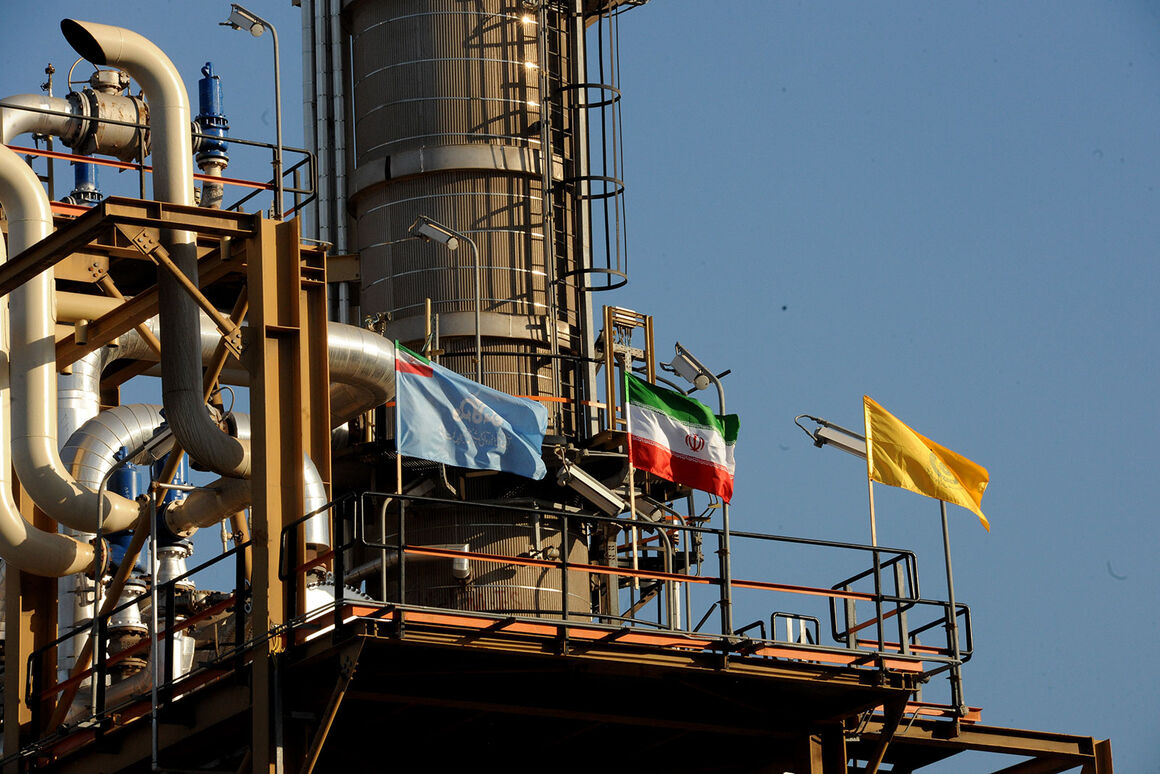
Beyond grappling with fuel supply-demand imbalances and mounting pressure across the production and consumption chain, the sector faced one of its most serious developmental constraints: sanctions, restricted access to financial resources, and difficulty securing equipment and technology made it harder to execute new projects and attract investment.
Under these conditions, continuing the industry's development could no longer rely solely on construction projects. Reforming governance mechanisms, financial relationships, and creating new financing channels became essential.
Accordingly, the 14th government pursued a set of measures to improve financial relations between the government, the National Iranian Oil Refining and Distribution Company (NIORDC), and individual refineries — reforming regulatory practices, identifying investment opportunities, diversifying financial resources, and facilitating private sector participation. These measures aimed to build new investment capacity and reduce barriers to industry growth.
Clearing a Historic Bottleneck: Project Financing
One central pillar of this approach was leveraging upstream laws and regulations to finance major refining projects. Under Article 44(b) of the Seventh Development Plan, this capacity was applied to the Morvarid Makran, Anahita, and Isfahan Oil Refining Company's RFCC unit projects. Chinese credit lines were also pursued for Phase 2-2 of the Abadan refinery development and stabilization project, as well as for the Morvarid Makran petro-refinery construction project.
Alongside this, consultations were held with the National Development Fund to help finance part of the investment needed for the Khuzestan refinery project and the Isfahan refinery's RFCC unit, while legal avenues for financing refining projects continued to be explored.
One-year foreign currency facilities from the Central Bank's foreign exchange reserves were pursued to finance flagship projects at the Persian Gulf Star Gas Condensate... actually, more precisely: the Pishgaman Siraf gas condensate refinery and the Javid Energy Parto gas condensate refinery, along with the issuance and activation of special deposit certificates to help finance these projects.
Attracting Investors: A Shift from Executor to Facilitator
Alongside efforts to secure financing, NIORDC also revisited its approach to identifying investment opportunities.
The goal was to boost the effectiveness and efficiency of private sector participation, maximize private capital inflows, and strengthen NIORDC's role as a regulator, guide, and facilitator — particularly across the value chain segments of refining, transport, storage, and distribution of petroleum products.
To this end, specialized sessions were held to facilitate partnerships and attract investors, alongside feasibility studies for outsourcing select activities. These included studies on the feasibility and economic justification of outsourcing the country's aircraft refueling centers, and assessing the potential transfer of non-strategic storage facilities near refineries to neighboring refining companies. This shift reflects a broader effort to make more effective use of private sector capacity and reduce the operational burden on activities that could be outsourced or contracted.
Expanding the Value Chain: Moving Beyond a Fuel-Centric Model
Another key focus was expanding the refining industry's value chain and reducing refineries' economic dependence on fuel production alone.
The company's strategic plans emphasized identifying investment opportunities to expand the value chain, diversifying project financing, managing demand, and diversifying the refined product portfolio — all aimed at addressing the sector's fuel-centric dependency. The goal was to redirect part of the industry's capacity from pure fuel production toward higher value-added products, thereby creating new revenue streams to support industry growth.
Governance Reform: A Precondition for Development
Alongside financing, reforming governance structures was pursued as another prerequisite for industry development. Outsourcing non-sovereign operational functions where service procurement was feasible was one focus area; alongside outsourcing feasibility studies, specialized sessions were held to facilitate partnerships and investor engagement.
In line with the Seventh Development Plan, organizational restructuring was also pursued, aiming to cut at least 15% of organizational layers in operations coordination and oversight management, as well as in commercial management. Restructuring of the public relations and legal affairs and contracts divisions was considered within this same framework.
Development Amid Resource Constraints
The significance of these measures becomes clearer against the backdrop of the past two years — a period in which the refining and distribution industry faced fuel imbalances, sanctions, limited financial resources, and difficulty accessing the technology and equipment needed for new projects, while two imposed wars further disrupted existing capacities and development plans.
Under these circumstances, creating new financing channels, tapping the National Development Fund and foreign currency reserves, pursuing foreign credit lines, attracting private capital, and reforming financial relationships were not merely administrative or economic actions — they were an effort to keep the door to investment open and prevent industry development from stalling amid constraints.
From Crisis Management to Building Future Capacity
The 14th government's approach in this domain can be seen as an attempt to drive structural change — one in which the refining and distribution industry, while fulfilling its current responsibilities, also pursues diversified financing, value chain expansion, greater private sector participation, and governance reform.
This path has been pursued despite constraints from sanctions and two wars that have made executing many projects more difficult. Yet the continued effort to keep financing and investment channels active shows that industry development has remained on the agenda even amid crisis.
The story here is one of pushing forward under constraint — overcoming financing bottlenecks and structural barriers by drawing on legal capacities, domestic and foreign resources, private sector participation, and governance reform — so that the refining and distribution industry can manage today's challenges while building the capacity it will need tomorrow.
Your Comment