
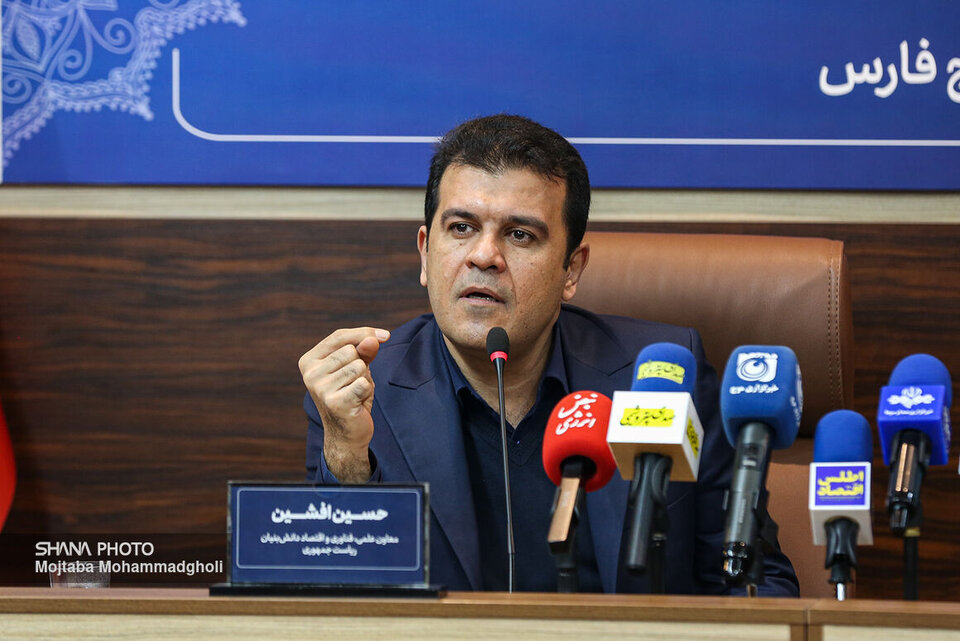
According to the Vice Presidency for Science, Technology, and the Knowledge-Based Economy, a meeting was held on Saturday to review the progress of the fuel card–bank card integration project following the approval of its executive regulations. The session was attended by Vice President Hossein Afshin, Deputy Minister of Economy for Economic Policy Morteza Zamanian, Mohammadali Norouzzadeh, Head of the Strategic Management Center for Cybersecurity (AFTA), and other officials overseeing the project.
During the meeting, Afshin referred to First Vice President Mohammadreza Aref’s directive to accelerate the project and coordinate its implementation. He noted that responsibility for managing the required coordination has been assigned to the Vice Presidency for Science and the AFTA Center, with the goal of resolving implementation challenges as quickly as possible.
Afshin acknowledged that some managers remain hesitant due to concerns about potential cybersecurity risks. He said this cautious mindset needs to change, emphasizing that no digital system is completely immune to cyberattacks. Instead of avoiding technological upgrades, he argued, the focus should be on identifying and managing risks through stronger security measures.
He also criticized the current fuel card system, saying its technical limitations prevent policymakers from introducing modern, data-driven fuel distribution models. According to Afshin, maintaining the existing system restricts the government's ability to implement smarter pricing and quota mechanisms. He added that enhancing security and providing expert guidance can help build confidence among decision-makers and pave the way for the project's successful rollout.
At the conclusion of the meeting, Afshin instructed officials to hold a series of specialized sessions involving project stakeholders and the AFTA Center to address the remaining operational issues. The final recommendations will then be submitted to the AFTA Center for implementation.
Your Comment