
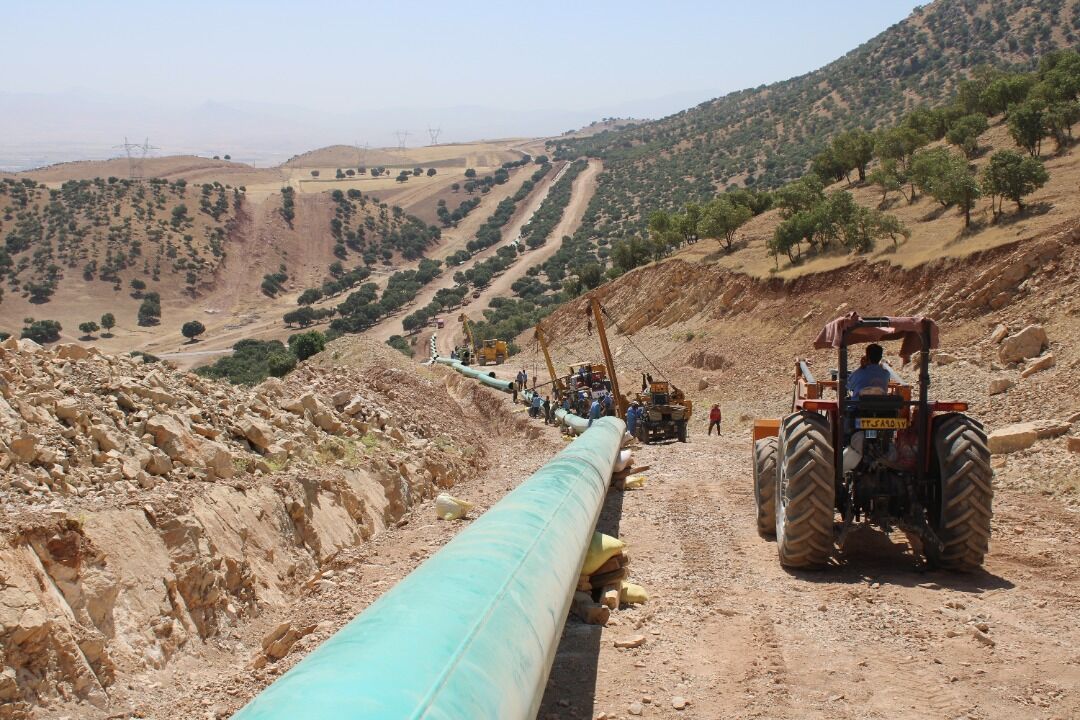
The strategic pipeline project, designed to reduce crude exports and reinforce Iran's oil transportation network, has entered full commercial operation on schedule. Supplied by the North Dezful oil fields, the pipeline is intended to ensure a stable flow of sour crude to the Shazand and Kermanshah refineries.
Technical specifications
The 341-kilometer pipeline consists of two sections with different capacities.
The first section, stretching 102 kilometers from Sabzab to Tang-e Fanni, features a 30-inch pipeline capable of transporting up to 450,000 barrels of crude oil per day. It became operational in September 2025.
The second section extends 239 kilometers from Tang-e Fanni to Shazand through a 26-inch pipeline with a daily capacity of 300,000 barrels. It entered service in late December 2025.
Supporting infrastructure
The project includes six operational pumping stations located at Sabzab, Tang-e Fanni, Asar, Pol Baba, Razan and Shazand. Supporting infrastructure also includes 43 kilometers (27 miles) of power transmission lines, 206 transmission towers and four dedicated electrical substations.
Domestic manufacturing
According to project officials, the pipeline represents a milestone in Iran's localization efforts in the oil sector. For the first time, corrosion-resistant NACE-grade pipes designed for transporting sour crude oil were manufactured entirely within the country and used throughout the project.
Officials said all pipeline equipment was produced domestically, underscoring the resilience of Iran's supply chain despite international sanctions and supporting the country's energy security.
Investment, engineering challenges
The project is estimated to have cost 110 trillion rials, with 90 trillion rials allocated so far. Construction was carried out in accordance with the health, safety and environmental (HSE) standards of the National Iranian Oil Refining and Distribution Company, with officials reporting no fatal accidents during the project.
Construction posed significant engineering challenges because the pipeline traverses mountainous and difficult terrain. Project managers and engineers completed the work without major operational problems.
The Sabzab–Tang-e Fanni–Shazand pipeline is now transporting crude oil, and officials said its throughput will reach full design capacity once the installation of the main pumps is completed. The project is expected to improve the efficiency of Iran's crude oil transportation network and strengthen the country's energy security.
Your Comment