
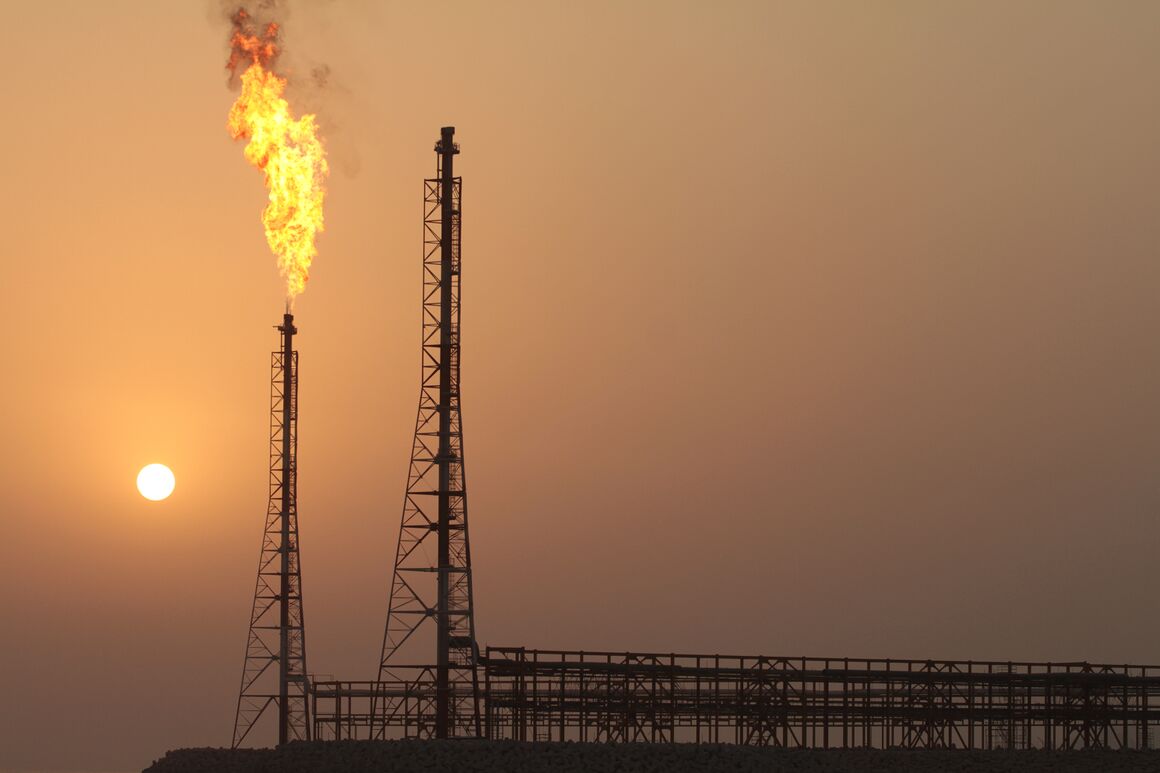
Reza Kheylaei, NIOC's director of oil and gas production supervision, said gas recovery has already increased from about 5 million cubic meters per day before the current government took office to more than 9 million cubic meters per day following the launch of new flare-gas collection facilities.
Associated gas, produced alongside crude oil, has long been one of the Iranian oil industry's most persistent challenges. Large volumes have historically been burned due to limited processing infrastructure, unfinished value chains and a longstanding focus on crude oil production. Officials say recovering the gas would not only generate significant economic value but also reduce emissions, improve air quality in oil-producing regions and help address the country's energy supply challenges.
Iran currently produces about 80 million cubic meters of associated gas per day. While part of that volume is processed through natural gas liquids (NGL) facilities and other downstream plants, between 40 million and 50 million cubic meters per day are still flared because of insufficient processing, sweetening, compression and transportation capacity.
To address the issue, Iran has launched a combination of long-term and short-term projects. Long-term plans include major investments in flare-gas collection facilities in East and West Karoun, the NGL 3200 plant in West Karoun, NGL 3100 in Dehloran and an NGL project on Kharg Island. Since full-scale gas processing plants typically require seven to 10 years to build, the government has also implemented shorter projects designed to deliver results within 18 to 30 months.
Several projects have already entered operation, including flare-gas recovery initiatives at the Marun 5 facility, the Dehloran gas compression station and the Haftkal gas injection station. Together, these projects have helped raise total recovered flare gas to about 9 million cubic meters per day.
Kheylaei said more than 90 flare sites are scattered across seven provinces, creating significant technical and financial challenges. Many of the gas streams are sour gas, requiring advanced treatment and compression equipment that can be difficult to procure.
The official estimated that roughly $6 billion in investment is needed to recover the bulk of Iran's flare gas. About $4.5 billion has already been secured, entirely from private-sector investors. NIOC has not directly financed the projects, with private companies responsible for funding and implementation.
To attract investors, Iran has adopted an auction-based model that allows companies to purchase flare gas, process it and generate revenue through the sale of higher-value products. In some remote locations where collection costs are especially high, the government has reduced auction base prices to zero to improve project economics.
Kheylaei said the long-term flare-gas recovery program is expected to create sustainable processing capacity of about 1.9 billion cubic feet per day, roughly equivalent to the output of one phase of the giant South Pars Gas Field gas field. The capacity is expected to support future oil and gas developments while preventing the creation of new flaring sources.
Officials also see flare-gas recovery as a way to strengthen feedstock supplies for petrochemical plants, power stations and industrial users, particularly during winter when rising residential demand strains the country's gas system.
Kheylaei said the government's strategy differs from previous efforts because it combines updated development plans, expanded private-sector participation and direct oversight from senior officials. The president is reportedly monitoring project progress on a near-weekly basis through a national tracking system designed to provide real-time oversight of priority projects.
Under Iran's Seventh Development Plan, the Oil Ministry is required to collect 16 billion cubic meters of flare gas annually, including 14 billion cubic meters under NIOC's responsibility. Officials say existing programs have been revised and accelerated to meet those targets.
If current projects remain on schedule and additional investment is secured, Kheylaei said Iran expects to reduce daily flare-gas volumes to approximately 35 million cubic meters by the end of the administration, substantially cutting waste and improving the country's energy efficiency.
Your Comment