
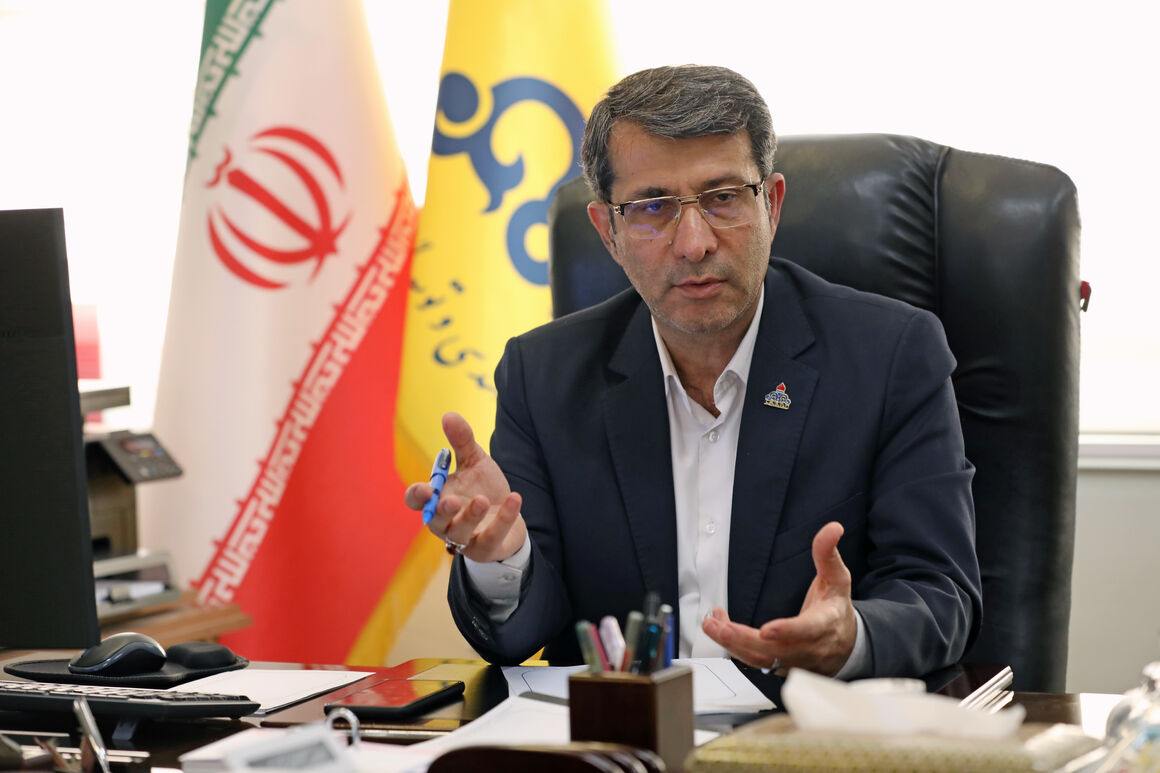
Behnam Mirzaei said the 56-inch Miandoab–Ajabshir pipeline project is about 96% complete. Stretching nearly 99 kilometers and designed to transport up to 98 million cubic meters of gas per day, the pipeline is expected to strengthen the stability of Iran’s gas transmission network in the northwest, enhance energy security for regional industries and support future export infrastructure.
Mirzaei said the project marks the first use of Class D pipes in Iran’s gas industry. The pipes require specialized engineering standards and involve more complex manufacturing, transportation, welding and installation processes than conventional pipeline classes.
He noted that difficult topography and natural obstacles along the route added to the project’s complexity. Over the nearly 100-kilometer route, the pipeline alignment had to be modified about 100 times, requiring precise engineering, integrated management and real-time decision-making during construction.
Land acquisition and legal issues were among the project’s most significant implementation challenges, Mirzaei said. These hurdles were addressed through ongoing coordination with local stakeholders and sustained administrative efforts.
He also cited financing and cash-flow management as major challenges, particularly amid economic pressures and the high cost of procuring pipes and equipment. Despite these obstacles, the project has remained on schedule through careful planning and continuous work by project teams.
Although the pipeline passes through the counties of Miandoab, Malekan, Bonab and Ajabshir, its benefits will extend across northwestern Iran by improving gas pressure stability and strengthening network dispatching capabilities.
Mirzaei said the project will enhance energy security, support industrial development and improve the reliability of household gas supplies before the start of the winter season.
Your Comment