
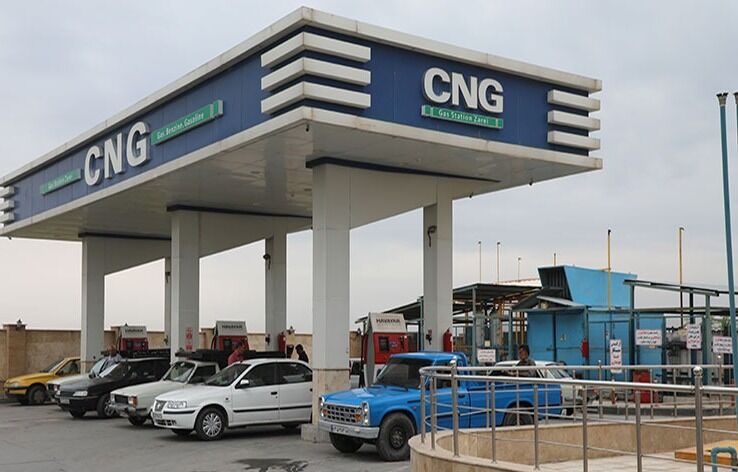
Iran’s gasoline imbalance is not a new issue. For years, energy policymakers have pursued measures such as expanding compressed natural gas (CNG) use and reforming gasoline distribution patterns to curb rising consumption. However, attacks on parts of the country’s critical oil infrastructure during the recent conflict — from refineries to fuel storage facilities — underscored that energy security cannot rely solely on production and distribution capacity. Consumption management has now become a central pillar of fuel security.
Within this framework, the Oil Ministry has focused on non-price mechanisms to steer consumption toward more sustainable patterns. Oil Minister Mohsen Paknejad said the government’s strategy centers on demand management and non-price reforms. The approach includes expanding CNG use in the transportation sector as the fastest alternative to gasoline while introducing premium gasoline supplies and examining multi-tier pricing mechanisms to distinguish between essential demand and excessive consumption.
Recent tensions also demonstrated that fuel supply stability depends not only on the oil industry’s operational capacity but also on public consumption behavior. Small-scale savings, wider use of alternative fuels and avoiding unnecessary consumption can significantly reduce national demand. According to Keramat Veis-Karami, cutting just one liter of daily gasoline consumption per household could save millions of liters nationwide, reducing both import costs and pressure on supply networks.
Among the government’s major initiatives is expanding the role of CNG in the fuel basket. Iran currently operates about 2,360 CNG stations with a combined daily capacity of 40 million cubic meters, though actual daily consumption is only around 16 million cubic meters. Authorities say this gap highlights substantial unused capacity in the network.
To strengthen CNG use, the government signed agreements with automakers to produce 55,000 dual-fuel vehicles. Contracts with domestic manufacturers include the production of 30,000 dual-fuel Nissan pickup trucks and 25,000 additional dual-fuel vehicles, projects expected to save hundreds of millions of liters of gasoline annually.
The government has also launched a free conversion program for eligible gasoline-powered vehicles, particularly taxis, pickup trucks and ride-hailing vehicles, allowing them to switch to dual-fuel systems at no cost.
At the same time, Iran introduced a three-tier gasoline pricing system in December 2025 to manage demand, reduce smuggling and encourage drivers to use personal fuel cards. Officials said the policy reduced the share of fuel purchased through station-issued cards — considered a major source of fuel leakage and smuggling — from 43% to 25% within a short period.
Alongside these reforms, the Oil Ministry also moved forward with premium gasoline imports to balance the fuel market and reduce pressure on subsidized gasoline supplies. Officials describe the combined strategy — expanding CNG, reforming gasoline pricing and introducing premium gasoline — as part of a broader effort to reduce unnecessary consumption, strengthen energy resilience and improve the country’s long-term fuel balance.
Your Comment