
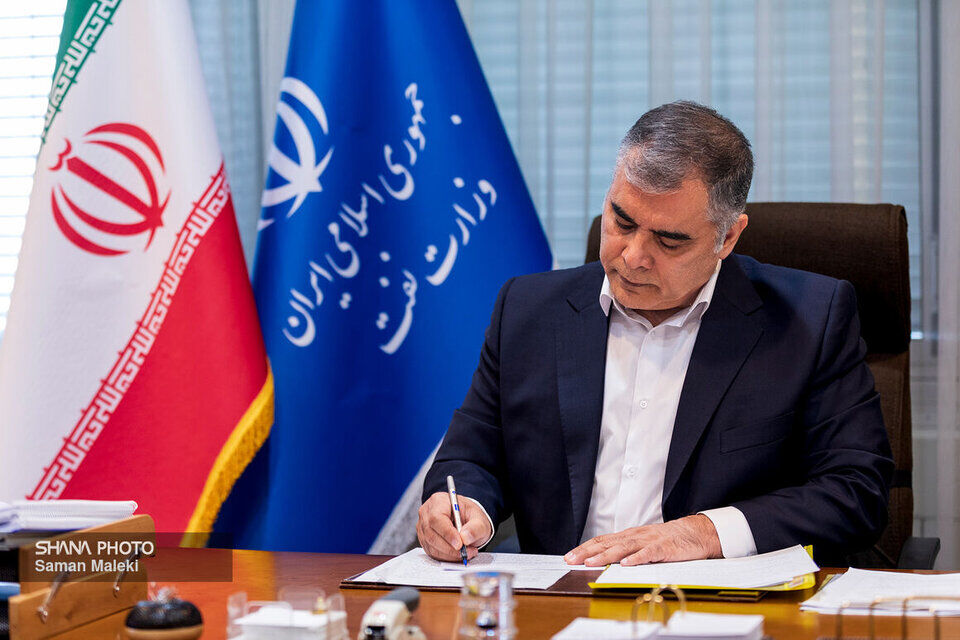
In the message, read during a ceremony honoring the families of petrochemical industry personnel killed during the Third Imposed War, Paknejad praised workers who, he said, remained at their posts under the most difficult conditions and sacrificed their lives to preserve the country’s strategic oil sector.
He said operational and support teams across the oil industry worked around the clock during the 40-day conflict to ensure uninterrupted fuel supply and energy services for the Iranian people despite attacks on energy infrastructure and direct security threats.
According to the minister, employees in upstream and downstream sectors, offshore platforms, export terminals, petrochemical complexes and transmission pipelines continued operations under dangerous conditions to prevent disruptions to oil and gas production, refining and exports.
Paknejad said some oil facilities were damaged in attacks carried out by the US-Zionist enemy, but restoration and repairs were launched immediately through emergency management measures and the efforts of operational teams, allowing services to continue without interruption.
He said the resilience shown by oil industry workers reflected a longstanding tradition dating back to the Iran-Iraq War, when employees at the strategic Kharg Island oil export terminal maintained exports despite repeated bombardments.
The minister also referred to an attack on the petrochemical special economic zone in Mahshahr on April 4, in which six employees of Fajr Energy Company were killed while protecting facilities and maintaining production operations.
Paknejad honored the memory of those killed and thanked oil industry personnel nationwide for continuing to ensure stable energy supplies under both normal and crisis conditions.
He said the oil industry would continue rebuilding damaged facilities and advancing development projects through the use of the country’s technical, managerial and scientific capabilities to ensure uninterrupted services for the Iranian people.
Your Comment