
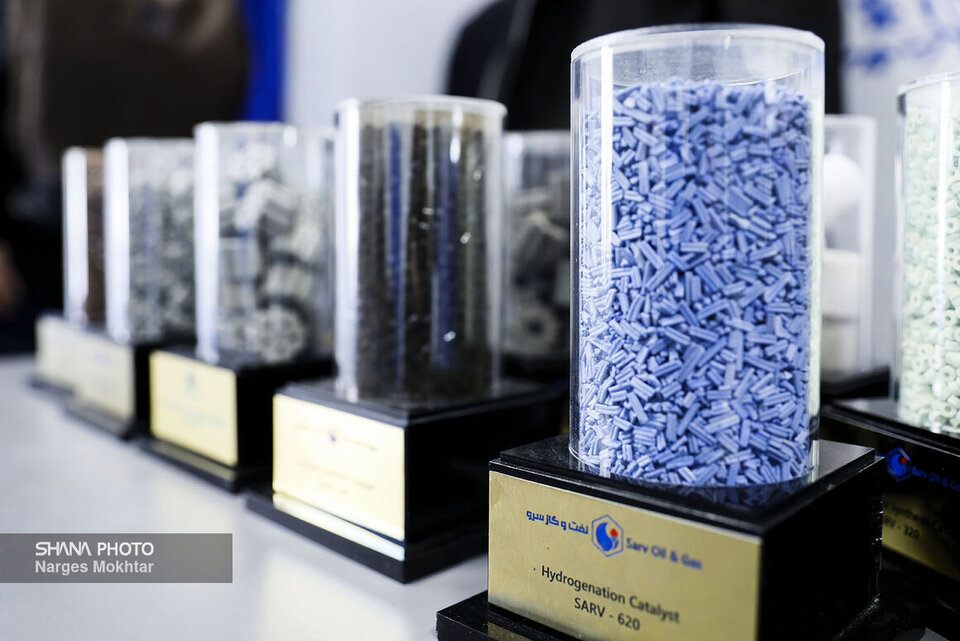
The anniversary of the Islamic Revolution, known as the Ten-Day Dawn, provides an opportunity to review progress and assess achievements in areas critical to production sustainability and the future of the oil industry. Research and technology have emerged as key drivers in increasing recovery rates, addressing long-standing field challenges and strengthening domestic capabilities within NIOC’s development agenda.
In recent years, NIOC has sought to build a strong link between knowledge, technology and production by prioritizing field-oriented research, expanding EOR technologies, deploying artificial intelligence and digital oilfield concepts, and strengthening cooperation with universities and knowledge-based companies.
Field- and problem-oriented research and technology studies are underway in 22 major oil and gas fields in cooperation with 13 universities and the Research Institute of the Petroleum Industry. Defined in line with the broader goal of technological self-sufficiency, the studies focus on identifying operational challenges and proposing practical solutions to improve production efficiency.
EOR pilot projects in eight oil fields
As one of the oil industry’s strategic priorities since the Islamic Revolution, EOR development has moved toward expanding technical know-how, completing conceptual and basic designs, and implementing technology pilots to address low recovery factors. Pilot projects are being designed for the Ahvaz, Mansouri, Azadegan, Soroush, Masjed Soleyman, Gachsaran, Pank and Kupal fields.
EOR pilot designs have been completed in eight of the 22 targeted fields. Once fully implemented, the projects are expected to raise recovery rates by about 5 percent.
Problem-oriented technology contracts have also been signed across NIOC subsidiaries, focusing on priority field challenges. In the National Iranian South Oil Co., projects are underway in 10 fields—Ahvaz, Bibi Hakimeh, Karanj, Kupal, Gachsaran, Mansouri, Pank, Masjed Soleyman, Rag-e Sefid and Marun—addressing 18 technology challenges.
At the Iranian Offshore Oil Company, technology studies are being conducted in the Soroush, Esfand, Alvand, Nowruz, Doroud and Forouzan fields, covering 16 challenges. Additional studies include the Azadegan and Yadavaran fields with four challenges under the Petroleum Engineering and Development Co.; the Khesht and Tang-e Bijar fields with four challenges under the Central Iranian Oil Co.; the Darkhovin field with four challenges under Arvandan Oil and Gas Co.; and the South Pars field with four technology challenges under Pars Oil and Gas Company.
Artificial intelligence and digital oilfields
In the area of artificial intelligence and digital oilfields, NIOC has drafted an AI-based governance framework. At the same time, technical and economic feasibility studies are underway for deploying digital oilfield technology in the South Pars, Nowruz, Darkhovin and Mansouri fields, a move expected to optimize operational decision-making and reduce production costs.
Contracts with TBFs to revive wells
Among other key initiatives is the signing of a tripartite memorandum of understanding to revive shut-in and low-productivity wells involving NIOC, the Oil Industry Technology and Innovation Park and the Innovation and Prosperity Fund. Under the agreement, 32 contracts have been signed with knowledge-based companies.
In equipment development and domestic capacity building, a mobile well-testing project for high-pressure, high-flow conditions has been successfully completed for the first time. Efforts are also underway to acquire technical know-how and localize the design, construction and operation of downhole and surface compressors as a strategic project.
In exploration, research and technology studies are being carried out under five exploration technology development projects in cooperation with five universities. More than 80 research and technology contracts with universities, research centers and knowledge-based companies are currently underway through NIOC’s Research and Technology Management and its subsidiaries. In addition, more than 25 research projects launched in previous years have been completed successfully.
Supporting graduate research
Human capital development and structured engagement with universities are also central to the program. Twenty master’s and doctoral theses have been completed, and 450 student research contracts have been signed and are being implemented across NIOC and its subsidiaries.
With an eye on the future of energy, NIOC has also launched feasibility studies on hydrogen technology development in the oil industry, with a focus on designing and implementing technology pilots to support clean energy development and diversification of the energy mix.
Overall, NIOC’s research and technology initiatives indicate a targeted shift toward addressing real field challenges, increasing production, improving recovery rates and reducing operational risks. Field-oriented projects, EOR pilot implementation, digital oilfield development and localization of strategic equipment reflect a move from purely academic studies to production-ready outcomes.
The approach underscores reliance on domestic capabilities, systematic cooperation with universities and knowledge-based firms, and the use of advanced technologies to ensure production sustainability. Continued progress along this path is expected to strengthen existing capacities and enhance the role of technology and innovation in the development of Iran’s oil and gas fields in the years ahead.
Your Comment