
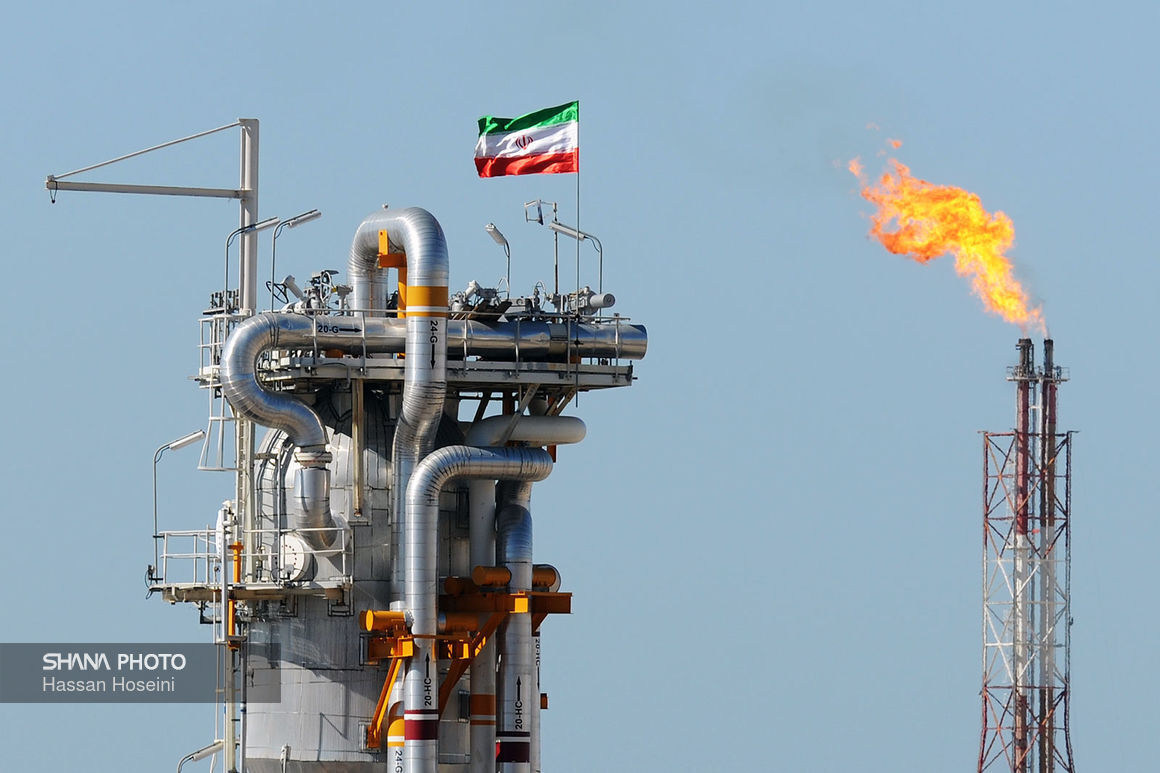
Today, 47 years after the establishment of the Islamic Republic on the world’s political map, a look at the upstream oil sector bears witness to remarkable growth achieved in less than half a century through the determination and tireless efforts of its workforce. Iran’s oil industry now stands as one of the world’s major players, continuing to energize the vital arteries of the national economy.
The National Iranian Oil Company (NIOC), as the Ministry of Petroleum’s powerful arm, is responsible for field development, production growth, and the management of oil and gas exports. Over the past 47 years, the company has weathered countless ups and downs and, by harnessing domestic capabilities, has taken major strides toward self-sufficiency and industrial strength. This report reviews the most important actions and achievements of NIOC across the country’s key oil and gas sectors.
Exploration: A Steady Pulse in the Depths of Iran’s Land
Just as oil and gas have continued to flow through mature fields over the past 47 years, new veins have also been discovered deep beneath Iran’s soil. Persistent exploration efforts have led to the identification of more than 70 new hydrocarbon fields—each a testament to the faith and self-sacrifice of those striving for independence and national pride. Of these, 36 are oil fields and the remainder gas fields. The discovery of giants such as the South Pars gas field—one of the world’s largest gas reservoirs—and the massive Azadegan and Yadavaran oil fields underscores the brilliance of exploration achievements during this period.
This year, too, has brought renewed hope to Iran’s oil industry. Petroleum Minister Mohsen Paknejad announced the discovery of major oil and gas reserves in the Pazan field in southern Fars Province. With an estimated addition of 10 trillion cubic feet of gas reserves, the field marks another major step in strengthening the country’s energy base and showcases the uninterrupted capabilities of domestic experts in exploration. Once again, this achievement proves that national resolve and indigenous knowledge are the keys to unlocking Iran’s hidden underground treasures.
South Pars: A Field of Triumph Over Challenges
Among the world’s largest gas fields, South Pars has remained both prominent and challenging over the past three decades. Shared between Iran and Qatar, it has long been the stage for intense competition—one in which a country backed by major international companies often appeared more a rival than a partner. Yet over the past decade, the narrative changed. Relying on domestic expertise and despite all constraints, Iranian oil industry workers not only prevented the rival from pulling ahead but also surpassed Qatar in daily production share.
South Pars is an epic of faith and determination flowing through the heart of the Persian Gulf. Over the years, it has been more than an energy source; it has been a cornerstone of independence and national security. Each new phase brought the economy closer to sustainability. Today, the field supplies more than 70% of Iran’s gas and feedstock for producing 40% of the country’s gasoline, making it truly the lifeline of the Iranian economy. With future projects such as pressure boosting and infill drilling, this invaluable legacy will be preserved for generations to come.
The crowning achievement of Iran’s oil industry under the Islamic Republic has been the identification and development of this shared field. Of its 9,700 square kilometers, 3,700 square kilometers belong to Iran. Of the estimated 1,310 trillion cubic feet of natural gas reserves, around 410 trillion cubic feet are Iran’s share. Similarly, of 49 billion barrels of gas condensate reserves, Iran holds about 16 billion barrels.
Operational data further highlight this success. About 55% of produced condensates are processed at the Persian Gulf Star Refinery, supplying roughly 45 million liters of the country’s 70 million liters of daily gasoline production. The value of gas produced from South Pars—covering most of Iran’s consumption—is estimated at the equivalent of 4 million barrels of oil per day. Cumulative gas production from the field through the end of the Iranian year 1402 exceeded 2,738 billion cubic meters, valued at approximately $850 billion.
Today, South Pars’ massive infrastructure includes 13 refineries, 3,200 kilometers of 32-inch subsea pipelines, and 39 production platforms generating more than 720 million cubic meters of gas per day. Each refinery produces vast quantities of valuable products—from gas and condensates to petrochemical feedstocks—worth about $3.5 billion annually. To date, some 29 million tons of products such as ethane, propane, and butane have been recovered, fueling the country’s petrochemical industry. These achievements offer tangible proof of national will overcoming adversity and show that South Pars is not merely a gas field, but a symbol of Iran’s industrial strength.
An Industrial Jihad and the Conquest of Production Peaks in West Karun
In the sun-scorched plains of West Karun, where the mighty Karun River flows alongside steadfast drilling rigs, another epic of Iran’s oil industry is unfolding. The region currently produces more than 350,000 barrels of oil per day, playing a major role in the national energy cycle. Under the Seventh Development Plan, output is targeted to rise by 1 million barrels per day, positioning West Karun as the focal point of oil industry development over the next five years.
Time moves quietly but steadily here as proud oil workers delve into the earth to unlock its secrets for national prosperity. Every drill bit strike in these young fields brings not only crude oil to the surface, but also stories of devotion and sacrifice—of men and women working around the clock with faith in a brighter, independent future.
More than 13 oil fields have been identified in West Karun, including giants such as Azadegan and Yadavaran, with an estimated 67 billion barrels of oil in place—much of it heavy and extra-heavy export crude. While development initially involved foreign companies, it is now driven entirely by domestic contractors and engineers, with the banner of self-sufficiency held high.
A New Milestone on the Path of Progress
Another major step forward came with the commissioning of the second Central Treatment and Export Plant (CTEP) at the South Azadegan shared field. The project, inaugurated via videoconference in the presence of President Masoud Pezeshkian and Petroleum Minister Mohsen Paknejad, increased crude processing capacity to 160,000 barrels per day. Beyond demonstrating the technical capabilities of Iranian engineers, the achievement injects new momentum into development plans and production growth from these strategic reserves. Today, West Karun stands more than ever as a stage for Iranian expertise and resolve, with each new milestone opening a fresh chapter in national energy strength.
Domestic Manufacturing: An Epic of Self-Sufficiency Through National Resolve
Over the past 47 years, Iran’s oil industry has faced numerous challenges, yet it was precisely amid these hardships that its workforce scaled new heights of progress and self-confidence. When access to advanced technologies was limited, manufacturers, contractors, and operators relied on reverse engineering and innovative designs to build and repair whatever this strategic industry required. With strong hands and creative minds, they localized tens of thousands of complex parts and equipment, truly pulling the industry through turbulent waters.
The Ministry of Petroleum has consistently supported and led this movement, ranking first among all executive bodies in backing domestic manufacturing over the past four years. Each product built in local workshops was more than a technical item; it symbolized faith, determination, and a vision for a brighter future.
In years of upheaval and in the absence of foreign firms, the industry survived and thrived through the hope and iron will of Iran’s sons and daughters. Today, the true wealth of Iran’s oil industry lies not only in its reservoirs, but in the boundless ingenuity of its specialists.
Once, the entire value chain—from exploration to production—was monopolized by foreigners. Although nationalization in 1951 marked a turning point, foreign presence remained strong until the Islamic Revolution. After their departure, Iranian engineers and technicians assumed full responsibility, achieving more than 80% self-sufficiency in the design, manufacture, and production of equipment. This journey tells the story of a people who became the authors of their own industrial destiny.
Associated Gas Recovery: A Green Epic in the Oil Industry’s Record
One of the oil industry’s most notable achievements has been the capture of associated gas. Once flared as an environmental burden and wasted energy, these gases have been transformed into a valuable and sustainable resource through relentless effort. This shift has not only improved environmental protection and community health, but also elevated the efficiency of national energy use.
Determined to extinguish the ever-burning flares, the Ministry of Petroleum launched a comprehensive program supported by domestic engineering expertise. The master plan comprises five long-term projects and auction-based sales initiatives, seven of which are already operational. Together, they deliver dual benefits: sharply reduced pollution and enhanced economic returns through optimal utilization of formerly wasted resources.
The ministry has set a target to collect more than 40 million cubic meters per day of flare gas by the end of 1406. This commitment reflects the nation’s resolve to protect nature and improve quality of life—transforming flickering flames of waste into a guiding light of national wisdom and will.
Exploration and Production Companies: Pillars of Self-Reliance
After the Islamic Revolution, Iran’s oil industry faced some of the harshest sanctions imaginable, yet it never stood still. At the height of pressure, domestic exploration and production companies such as Petropars, Petroiran, ISOICO, SADRA and others rose like fortresses. In the absence of foreign firms, they relied on Iranian expertise to keep the engine of this mother industry running.
They learned to build, repair, and upgrade every needed technology themselves, supported by the Ministry of Petroleum. True nationalization of Iran’s oil, in essence, was realized not only in 1951, but in the maturity and strength of these companies. Today, the independence of the oil industry is defined by the capable hands of this land’s children.
Social Responsibility: A Covenant With People and Land
In today’s world, corporate social responsibility is a pillar of sustainable development. In Iran’s oil industry, this commitment carries even greater weight. As engines of economic growth and symbols of national power, oil companies’ multibillion-dollar projects must reflect care for people and the environment.
By law, part of the investment in major oil projects is allocated to public welfare and local development, particularly in oil-producing provinces. Over the past 47 years, the Ministry of Petroleum has treated this duty not as a bureaucratic obligation, but as a national and humanitarian commitment.
The issuance of the Oil Industry Social Responsibility Charter provides a clear roadmap, emphasizing local supply-chain development for job creation, empowerment of host communities, cooperation with NGOs, active environmental protection, promotion of efficient consumption, and improved quality of life for employees.
Through extensive investment in education, healthcare, environmental, and infrastructure projects, Iran’s oil industry has shown that human development and environmental stewardship stand alongside oil and gas production. Today, social responsibility is rooted at the heart of this industry—not as a requirement, but as a core ethical value and an enduring covenant with the future of the land.
Your Comment