
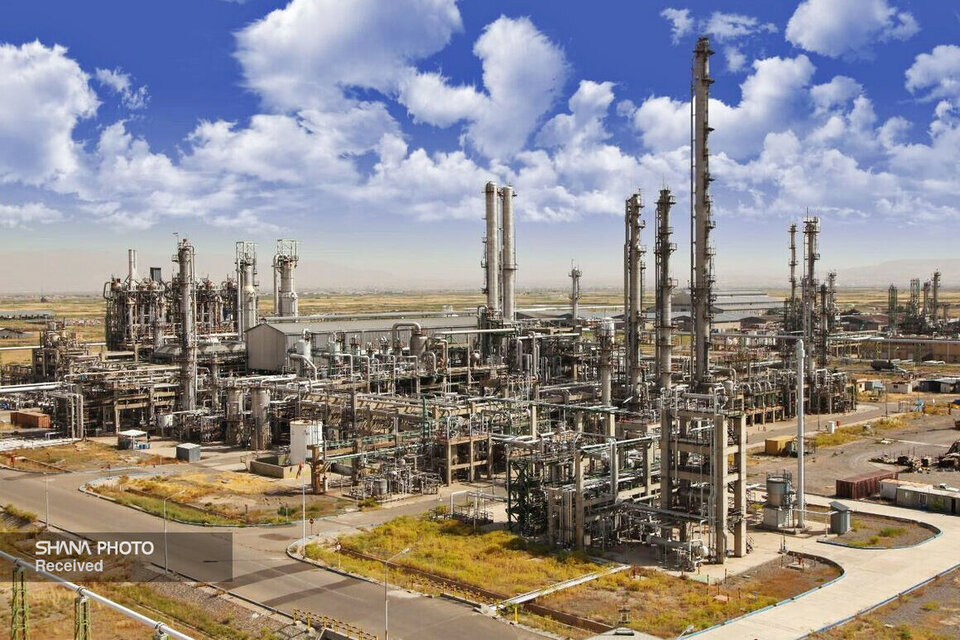
As a key driver of Iran’s non-oil economy, the petrochemical sector plays a central role in value creation, regional development, export growth and completion of the country’s hydrocarbon value chain. Much of the industry’s infrastructure and production capacity is now operational, while a range of development projects are either underway at varying stages or nearing completion.
Available data show that the 14th administration has inherited an industry that has reached relative maturity in terms of nominal capacity, geographic distribution and production-chain breadth. However, the sector still requires more balanced development, completion of downstream chains, removal of bottlenecks and improvements in efficiency.
79 complexes exceed 100m tons
With the operation of 79 production complexes, Iran’s petrochemical industry has surpassed 100 million metric tons in annual nominal capacity. The figure reflects a policy shift toward value-chain development rather than raw material exports. In addition, three utility complexes are operating to provide support services to production units.
Geographically, petrochemical development is not confined to a single area but is concentrated in several major hubs. The Assaluyeh region, with 28 complexes and annual capacity of 48.4 million tons, remains the country’s largest petrochemical center. The concentration is largely due to direct access to feedstock from the South Pars gas field and major investments in the Pars Special Economic Energy Zone.
The Mahshahr region ranks second, hosting 21 complexes with a combined capacity of 25.8 million tons per year. With a long history in the petrochemical industry, Mahshahr plays a key role in producing basic and intermediate products. Another 30 complexes, with a combined capacity of 25.6 million tons per year, are located in other parts of the country, signaling a gradual move toward more balanced geographic distribution, regional development and job creation.
New development zones
Alongside traditional hubs, policies in recent years have emphasized the development of new petrochemical regions to promote industry growth, regional employment and use of local advantages. Five new development zones have been designated, each at different stages of progress.
The Makran region, covering about 1,200 hectares, is considered one of the most significant future growth axes. Nine licenses have been issued in the area, and five projects are currently underway, underscoring the government’s focus on developing the Makran coast as a new industrial and export gateway.
The Parsian energy-intensive zone, spanning 1,000 hectares, has received 12 licenses, with two active projects underway. Other targeted areas include Jask, with two licenses issued; Qeshm Island, with four licenses; and the second phase of Mahshahr.
Completed projects
Iran’s petrochemical capacity has exceeded 100 million tons per year following the completion of several projects. These include Kimia Sanat Dalahoo polystyrene plant with annual capacity of 120,000 tons; Kimia Sanat Petro Entekhab Isfahan polystyrene plant with 50,000 tons; Apadana Persian Gulf methanol plant with 1.65 million tons; Arghavan Gostar Ilam polypropylene plant with 150,000 tons; Dehloran petro-refinery (NGL 3100) with 1.187 million tons; and the Negineh Makran power plant with 183 megawatts of capacity. Some of these projects have already entered official operation under the 14th administration.
Development plans
In addition to completed projects, multiple developments are underway at varying stages. Under the Seventh Development Plan, 61 projects with a combined capacity of 32.1 million tons and investment of $24.3 billion have been targeted. The Eighth Development Plan envisions 46 projects with total capacity of 51.3 million tons, requiring an estimated $44 billion in investment.
Your Comment