
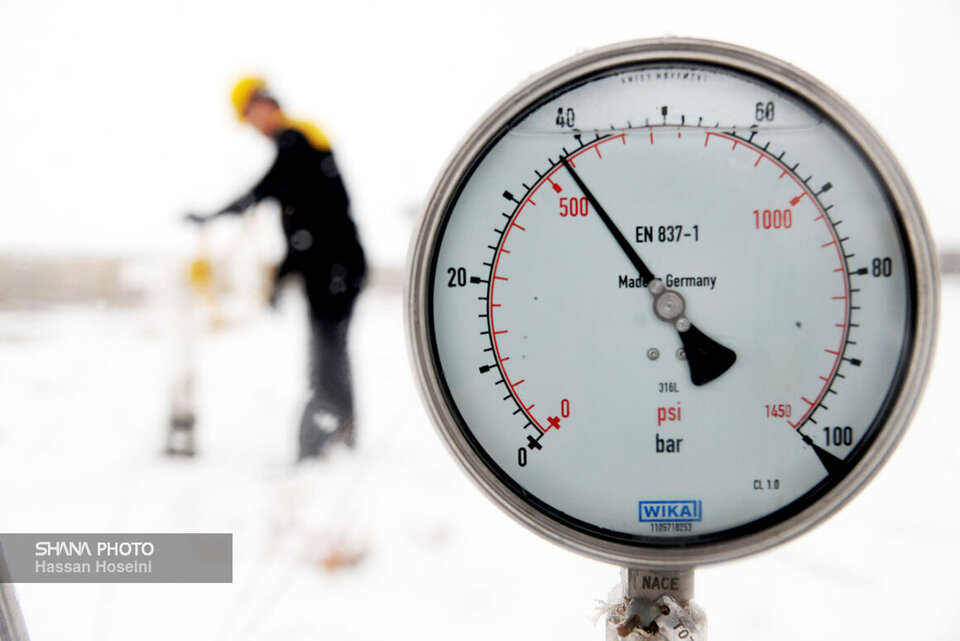
Official figures show that about 22% of the country’s produced energy is lost at the final consumption stage. As a result, energy policy has shifted from expanding production to managing demand. Under targets set in the country’s Seventh Development Plan, the equivalent of 200 million cubic meters of gas per day must be recovered through efficiency measures by the end of the program. Against this backdrop, leveraging private-sector capacity for gas demand management has become a key priority of the 14th administration.
Role of energy service companies
Energy service companies are intended to serve as the operational arm of gas demand management. Through efficiency projects — ranging from upgrading boiler rooms and heating systems to improving consumption patterns in the residential, commercial and industrial sectors — the companies seek to reduce gas use.
Their work is based on precise measurement and verification of actual savings. Each cubic meter of gas saved is defined as a tradable economic asset. Reduced consumption under this model is certified through energy savings certificates, which the companies receive for each cubic meter of gas saved. These certificates can be offered to large industrial consumers through the Iran Energy Exchange.
The price gap between subsidized household gas tariffs and the market value of saved gas traded on the exchange provides the main incentive for private investment in consumption-reduction projects, creating what officials describe as a transparent and reliable economic cycle for efficiency.
In addition, the companies analyze historical consumption data and forecast future demand, enabling them to implement managerial and technical measures simultaneously. These include smart scheduling of equipment use, consumer education programs and economic incentives to encourage behavioral change. The approach is designed not only to reduce consumption in practice but also to institutionalize a culture of energy efficiency and conservation across society.
Contract framework and implementation
Two types of contracts have been defined for the program. Under the first model, an energy service company acts as a gas retailer, taking responsibility for distribution and consumption management within a defined area. Under the second, companies focus solely on consumption optimization and generate revenue from energy savings certificates.
On Sunday, Jan. 25, 22 operational contracts were signed between 11 provincial gas companies and private energy service firms. The contracts cover the provinces of Isfahan, Khorasan Razavi, Qom, Kermanshah, Markazi, Yazd, Mazandaran, Kurdistan, Chaharmahal and Bakhtiari, Kohgiluyeh and Boyer-Ahmad, and South Khorasan. They span residential, commercial and administrative buildings, as well as greenhouses, poultry farms and brick-making industries.
The NIGC has emphasized continuous performance monitoring and verification of savings. Accurate measurement of reduced consumption, registration of data in smart systems and linking results to the Energy Exchange are among the key requirements of the program. The companies are also required to submit analytical reports on consumption trends and future demand forecasts to support smarter resource management.
Expected outcomes
Estimates indicate that full implementation of the contracts could reduce end-use gas consumption by 25% to 35%. Beyond easing the country’s energy imbalance, the measure is expected to channel gas resources more effectively to productive and energy-intensive industries, lower household utility bills, improve network efficiency, enhance equipment quality and reduce environmental pollution.
Experts say the model could open new investment opportunities for the private sector and offer a replicable framework for sustainable energy management. Continuous monitoring, data collection and trend analysis are expected to help identify high-consumption points, optimize equipment scheduling and design economic incentives for consumers to change behavior.
Officials argue that the initiative is not merely a technical solution but a comprehensive tool for advancing the country’s economic, environmental and social objectives in energy management.
Your Comment