
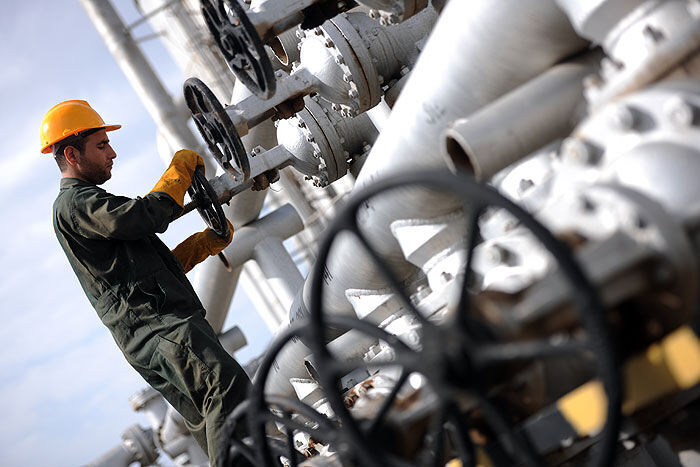
Elina Baqeri, speaking to Shana, outlined the details of an oil processing contract with the National Iranian South Oilfields Company, describing processing and desalting as among the most critical links in the crude oil production and export chain. She said such facilities in Iran have traditionally been developed as large-scale plants, which, because of their size and complex construction processes, typically took five to 10 years to complete.
Baqeri said the lengthy timelines meant that after a well was drilled — a process that takes three to five months — production increases depended on completion of processing plants, effectively preventing timely utilization of drilled wells. She added that this challenge, seen globally, led countries with scattered fields and well-by-well production growth potential to adopt fast-track or skid-mounted processing and desalting units as a standard solution.
The Axon Holding CEO said the technology has delivered successful results in Iran, adding that the units, which are prefabricated in factories and rapidly installed on site, have brought about a fundamental shift in oil processing.
She noted that in Iran, Italian company Italfluid built and commissioned the first fast-track unit at South Azadegan, which now plays a key role in production in the West Karoun region.
Defining New Capacity for Crude Oil Processing
Baqeri said a second skid-mounted processing unit, developed under a build-own-operate (BOO) contract and known as the West Stable Unit, was completed by one of Axon Group’s companies. The unit has processed more than 5 million barrels of crude oil without a single day of shutdown, she said.
She added that the project marked the first experience of an Iranian company executing an integrated contract, commissioned by the Oil Engineering and Development Company and ZNV.
Referring to new policies at the National Iranian Oil Co., Baqeri said the company has taken a major step by defining significant crude oil processing capacity through BOO contracts and by using the legal framework for public-private partnerships. The move, she said, has helped expand the desalting and processing sector and accelerate production from ready-to-operate wells.
She said the investment, construction and operation plan for the Karanj field includes one year for construction and 10 years for operation, with a contract value of about $200 million, and is expected to generate substantial employment.
Baqeri said Axon Group, drawing on its experience in construction and operations, is determined to bring the unit online in less time than stipulated in the contract while meeting international standards and ensuring production stability.
Investors as Operational Partners in Oil Projects
Comparing public-private partnership models with traditional EPC and EP contracts, Baqeri said under older models contractors were responsible only for engineering and construction, with no obligation to ensure sustained production. In contrast, she said, payments under public-private partnership contracts are performance-based, obligating investors and operators to maintain standards and quality throughout the project’s life.
She said the long-term nature of such contracts makes production stability as important to investors as it is to the employer, with any production losses affecting both sides. She added that attracting capital beyond NIOC resources and engaging investors as operational partners plays a key role in project success.
In closing, Baqeri praised the Oil Ministry and NIOC for their approach to assigning large projects to the private sector, saying that in long-term oil and gas projects, management stability and alignment of ownership and management are key success factors. She said the private sector’s insulation from policy and legal shifts gives it a distinct advantage, calling the full transfer of processing projects to the private sector commendable and urging private companies to repay that trust through timely, high-quality execution.
Your Comment