
According to
Nowadays, many Iranian engineers are in charge of constructing major and complex dam building projects in Africa and
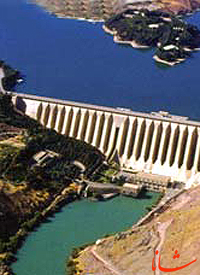
The objectives of constructing dams in Iran include providing water for irrigation or urban water supply, improving navigation, creating a reservoir of water to supply industries, generating hydroelectric power, setting up recreation facilities or habitat for fish and wildlife, control flood and containing effluent from industrial sites such as mines or factories. Few dams serve all of these purposes but some multi-purpose dams built after the 1979 Islamic Revolution serve more than one.
Since 1979, dam construction industry entered a new phase: The aim was to attain self-sufficiency in implementing major development projects nationwide.
Under the First Five-Year Development Plan (1989-1994), major steps were taken to this end. The Energy Ministry made intensive efforts to provide water for irrigation, control floods and contain effluent from industrial sites. As a result, the number of dams constructed in the first two decades of the revolution (1979-99) went up from about 13 to 60.
Currently, the Energy Ministry aims to construct 70 major dams and implement 48 major irrigation projects across the nation. It is safe to conclude that the country has indeed reached self-sufficiency in terms of designing, supervising, constructing, managing and exploiting dams.
Latest official statistics put the number of dam projects in
The same statistics show that the country built few dams before the revolution, but in 1995 the number reached 42! Also the country reviewed construction of 491 dams during the same period, whereas before the revolution there only one dam project was under consideration!
In short, the country has now 548 dams which are supplying water to over two million hectares of farmland. After the construction of the remaining 1,184 dams, the Energy Ministry will be able to supply water to well over 4.4 million hectares of farmland.
According to the latest World Bank report, the total capacity of dams in
As per the World Bank report, organizational motivation and strategic development policies are behind the continuation of the policy of constructing dams in
Your Comment