
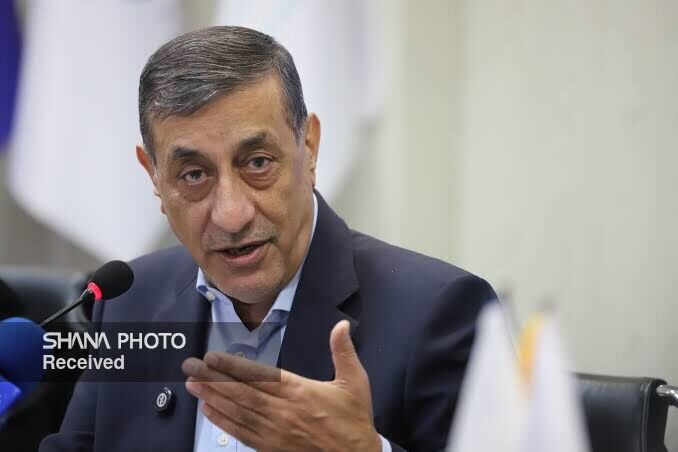
The session was led by Mohammad-Jafar Ghaempanah, executive vice president to the president, along with deputy oil ministers, according to IRNA. Officials discussed how relevant government bodies plan to carry out the directive.
Ghaempanah said the president has asked for detailed reports on measures taken so far and wants each agency's responsibilities clearly defined, with specific benchmarks and figures, to ensure more coordinated implementation.
He said a follow-up meeting with the president is planned for next week, once conclusions are finalized. That meeting is expected to set concrete, enforceable consumption targets for water, gas, electricity and other energy sources in every province, with quotas communicated monthly or through other designated mechanisms.
At a subsequent meeting involving the president and Cabinet ministers, agency performance under the directive will be reviewed and duties assigned accordingly, Ghaempanah said.
He also warned that after attacks on the country's gas refineries, Iran could face a shortfall of roughly 100 million cubic meters of gas per day this winter. Regardless of temperatures, he said, the country is dealing with an energy imbalance that must be carefully managed.
On electricity, Ghaempanah said conditions have improved somewhat compared with earlier periods, and power outages affecting industries and industrial zones have been reduced to a minimum.
He emphasized that consumption management requires measurable indicators, and that officials need proper tools to evaluate agency performance.
Under the new system, three categories are defined: water and energy carriers, service-providing agencies, and executive bodies, Ghaempanah said. The goal, he added, is to manage national water and energy use while curbing consumption within government agencies themselves.
While the direct impact of such measures may be limited, he said, fostering a broader culture of responsible consumption is more important. He said the president is personally practicing conservation in an effort to promote that culture across the government, and added that the effort should begin in schools, hospitals, health centers and all executive agencies before spreading through society.
Ghaempanah noted that per capita consumption of gas, electricity, water and gasoline in Iran is high compared with many other countries, and said correcting these patterns would help the country manage its current challenges while boosting efficiency over the long term.
The meeting also included Masoud Nosrati, deputy interior minister for urban and rural development; the Oil Ministry's planning deputy; the head of the National Iranian Gas Compay; the head of the National Iranian Oil Refining and Distribution Company; and other officials. Participants reviewed progress on Article 16 of the directive, including efforts to activate and complete a monitoring system for energy use in the country's residential and administrative buildings.
Your Comment