
The Aban and Paydar Gharb development project is designed to deliver an estimated 67 million barrels of additional cumulative production over 10 years under Iran's new petroleum contract framework. Located about 35 kilometers from the Cheshmeh Khosh Central Processing Facility, the Paydar Gharb field is expected to increase production capacity while creating approximately 1,000 jobs, including 890 positions filled by local workers.
Knowledge as the Foundation of Sustainable Development
Technology transfer is a cornerstone of the project. A specialized radial drilling training program was recently held for engineers from the Petroleum Engineering and Development Co. (PEDEC), the Iranian contractor partner and the contractor's Iranian workforce.
According to Sirous Aqajeri, head of the Aban and Paydar Gharb development project, the training was conducted as part of technology transfer commitments under Iran's Integrated Petroleum Contract (IPC) framework in cooperation with Russian company ZDNV. The program combined classroom instruction, practical training and post-workshop activities to give Iranian specialists hands-on experience with advanced drilling technologies and their application in field operations.
Radial drilling increases the contact area between a well and the reservoir by creating lateral branches around the wellbore. The technology improves fluid flow, enhances well productivity and can increase reservoir recovery. Transferring this expertise to Iranian engineers is expected to strengthen domestic capabilities for future development projects.
Aqajeri said technology transfer programs not only expand technical knowledge but also support the localization of advanced technologies and strengthen the expertise of Iranian professionals, a key element of sustainable development in the oil industry.
Local Technology Supports Production
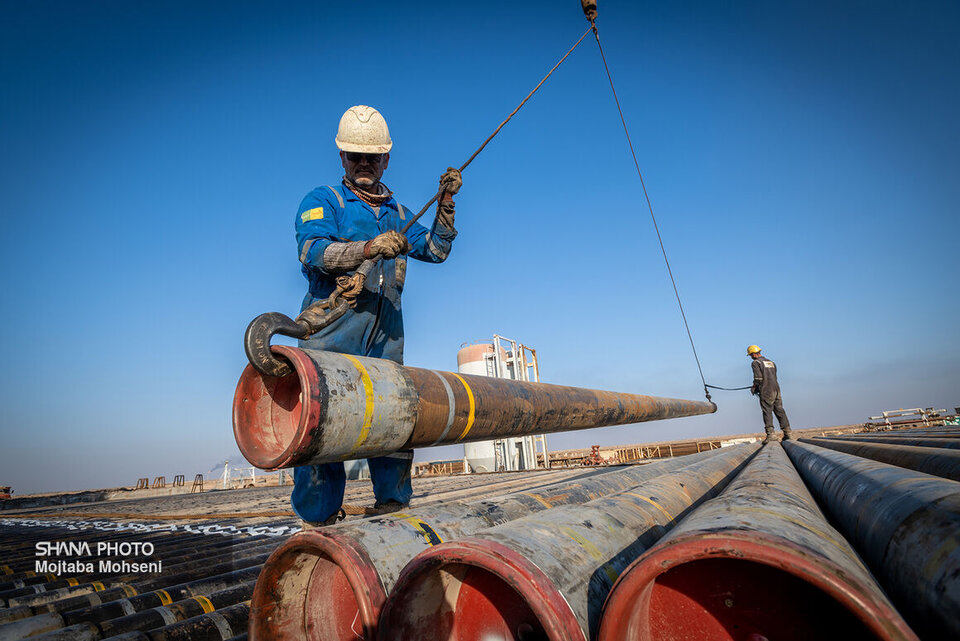
The project also emphasizes the use of domestically manufactured equipment. Locally produced glass-reinforced epoxy (GRE) high-pressure pipes have replaced metal pipelines used to transport produced water for reinjection into wells.
Aqajeri said the GRE pipes improve the reliability and durability of the water transportation system while reducing dependence on imported equipment and lowering maintenance costs.
The pipes also offer greater resistance to corrosion, helping reduce the risk of equipment failure and leaks while improving operational safety and minimizing environmental risks. All performance tests and quality evaluations have been approved by the project's quality control unit and the main contractor's technical teams.
Aqajeri described the initiative as an example of integrating modern technology with domestic manufacturing capacity, supporting both production growth and the expansion of Iran's local supply chain.
Smart Monitoring Improves Operations
Digital monitoring is another key component of the development strategy. A 24/7 monitoring system provides real-time oversight of wells and production facilities, giving engineers continuous access to operational data.
The platform monitors producing wells and downhole pumps in real time while generating immediate reports on equipment failures and operational issues. This capability is particularly valuable in remote border areas where well access can be challenging, allowing operators to identify and address problems before they disrupt production.
The system also continuously monitors wastewater disposal wells, providing data that supports maintenance planning and improved injection performance.
Real-time surveillance of oil pipeline pressure helps detect pressure fluctuations, equipment failures and other operational issues before they escalate.
The monitoring platform also tracks processing operations, enabling operators to identify abnormal conditions early and schedule maintenance proactively, reducing the risk of unplanned shutdowns and lowering operating costs.
By providing a continuous, comprehensive view of production activities, the system supports data-driven decision-making rather than reactive responses. Continuous monitoring also strengthens environmental protection by enabling faster detection of equipment failures, pipeline leaks and issues affecting wastewater disposal systems.
Production, Jobs and Environmental Responsibility
Beyond increasing production, the Aban and Paydar Gharb project is expected to generate about 1,000 jobs, with 890 positions held by local employees, underscoring the role of oil developments in supporting regional employment.
At the same time, sustainable development requires more than production growth and job creation. Durable equipment, corrosion control, pipeline monitoring, oversight of wastewater disposal wells and rapid responses to operational issues all contribute to higher efficiency while reducing environmental risks.
Training skilled personnel, deploying locally manufactured GRE pipes and expanding smart monitoring systems are interconnected elements of a broader strategy to improve production management, reduce costs and enhance operational safety.
A Broader Vision for Oil Field Development
The success of the Paydar Gharb project cannot be measured solely by oil output. Its approach combines increased production with technology transfer, workforce development, domestic manufacturing, advanced digital technologies, local employment and environmental responsibility.
Together, these initiatives position the field as more than a source of hydrocarbons. They support technological advancement, strengthen domestic industrial capacity, create jobs and improve production management, offering a more balanced model for sustainable oil field development.
As Paydar Gharb continues its expansion, the project aims to increase production while leveraging knowledge, technology and local expertise to manage costs and operational risks. The integrated approach could serve as a model for linking production growth with long-term sustainable development across Iran's oil sector.
Your Comment