
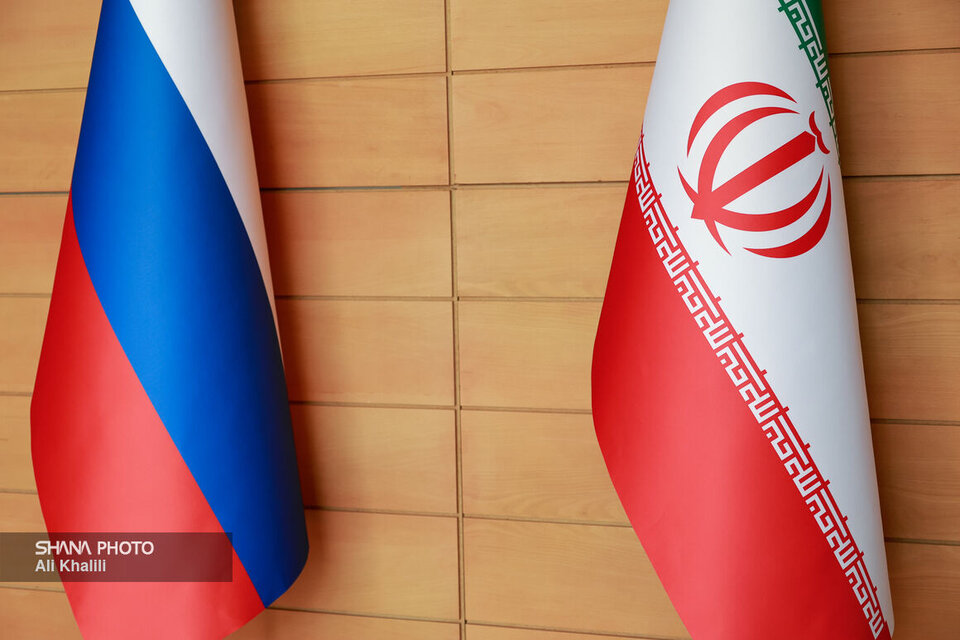
Shoeyb Bahman, discussing Russia’s importance given its position in Eurasia and global interactions, said Iran has several clear and tangible opportunities in its relationship with Russia. He grouped them into energy, grains and food security, trade and transit, and industrial and technological cooperation.
Bahman said one of the most significant areas for cooperation in energy is attracting investment and technology for oil, gas and petrochemical fields. Russia, as one of the world’s largest oil and gas exporters, has substantial experience in exploration, drilling, pipeline construction and LNG, capacities that could strengthen joint projects.
He added that Russian companies are interested in participating in Iranian projects, creating opportunities to attract capital and advanced technologies.
Bahman also cited coordination in global markets as another area of cooperation. Price coordination, swap agreements and the development of joint export projects for oil, gas and petroleum products could be pursued, particularly as the two countries share many target markets, including China and Turkey.
He described the transit of Russian energy through Iran as another major opportunity. With Western routes constrained after the Ukraine war, Russia is seeking alternative export paths, and Iran could serve as one of the shortest and most secure corridors for transporting Russian gas through long-term agreements and joint industrial and power projects.
Long-term grain contracts proposed to strengthen food security
Bahman pointed to cooperation in grains and food security, noting that Russia is among the world’s largest grain exporters, especially wheat, with exports estimated at about 53 million tons in 2024 and 2025. Iran could play a role through long-term or barter contracts, both to meet domestic demand and for re-export via its ports and free zones, generating revenue while enhancing food security.
He described trade and transit as another key axis of bilateral relations. Iran’s geopolitical position, with access to the Caspian Sea and the Persian Gulf, alongside Russia’s need for open-water routes, makes completion of the International North-South Transport Corridor a shared priority. Iran, he said, should plan to capture greater economic benefits by creating domestic value-added rather than serving solely as a transit route.
Bahman also emphasized the importance of expanding industrial and technological cooperation, including in heavy industries, machinery, energy equipment, auto parts, as well as technology transfer in rail transport, port infrastructure and electricity and gas networks through joint projects.
20-year strategic treaty provides legal framework
Bahman said that with both countries under U.S. and Western sanctions, these restrictions should no longer be seen as barriers to cooperation. Linking banking networks, using national currencies, adopting alternatives to SWIFT, and reducing reliance on the dollar and euro are among measures that could lower transaction costs.
Referring to the 20-year comprehensive strategic partnership treaty between Iran and Russia, he said the agreement serves as a roadmap and provides a legal framework for balanced cooperation. He added that multilateral engagement through the Eurasian Economic Union, the Shanghai Cooperation Organization and BRICS could further strengthen the balance of relations.
Bahman stressed that stable and strategic relations will only take shape when both sides benefit. “Neither Iran nor Russia can pursue a one-sided approach. Balanced relations must be built on a win-win framework and the national interests of both countries,” he said.
Addressing differing views in Iran toward Russia, Bahman said some critical perspectives stem from historical experiences, but foreign policy cannot be based on historical emotions. He said current conditions and the structure of the international system differ from the past, requiring both countries to adopt a pragmatic approach to elevate ties to a strategic level.
Your Comment