
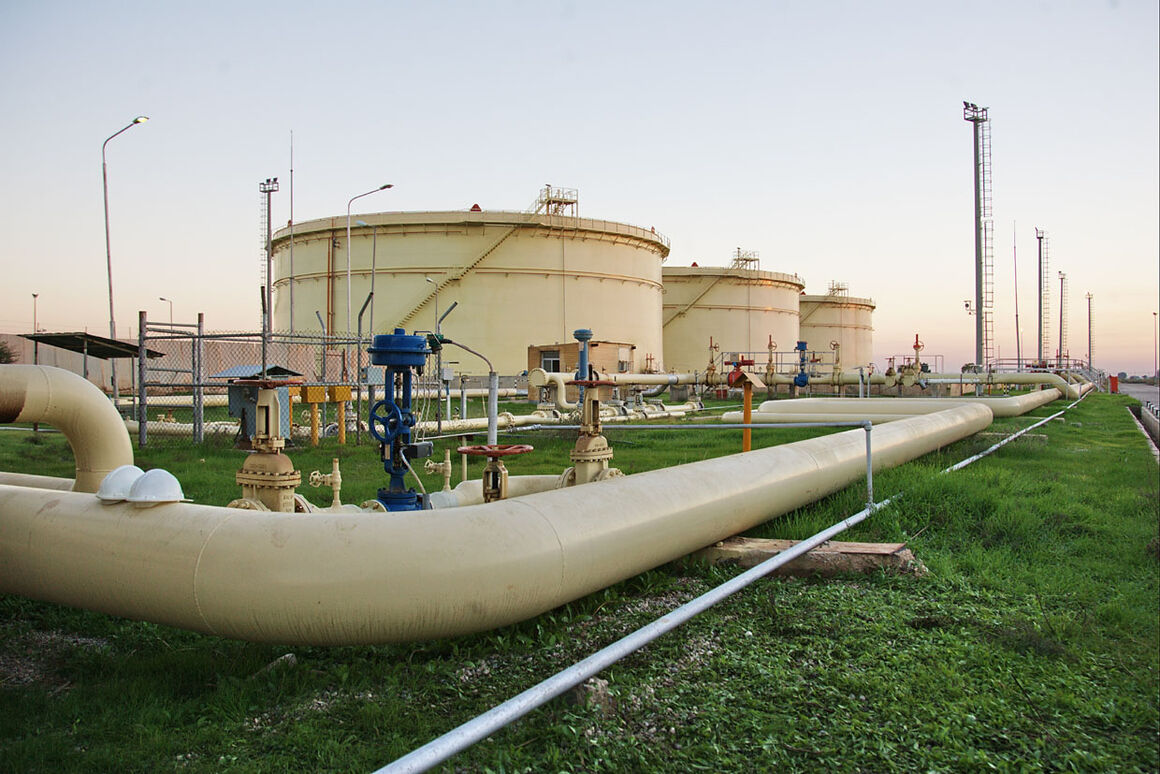
Mohammad Meshkinfam said that sustained efforts by company staff led to the completion and operation of several key oil and petroleum product transfer projects, including the strategic Bandar Abbas–Sirjan–Rafsanjan petroleum products pipeline. The line currently has a capacity of 100,000 barrels per day.
He said the first phase of the 26-inch pipeline, stretching about 460 kilometers, became operational last year. The second phase—covering the installation of all pumps and mid-route facilities, including pumping stations in Bandar Abbas, Qotbabad, Mehraran and the Rafsanjan terminal—is underway and will soon raise capacity to its final level of 300,000 barrels per day.
Annual savings of 6 trillion rials
Meshkinfam said the pipeline plays a key role in easing fuel transfer bottlenecks from southern Iran to central and northern regions. Once fully operational, it is expected to save about 6 trillion rials annually in transportation costs.
He added that the project has significantly reduced road traffic and safety risks by eliminating the daily movement of about 1,600 fuel tankers. During construction, more than 1,500 people were employed directly and about 3,000 indirectly.
Meshkinfam also highlighted the strategic Sabzab–Shazand crude oil pipeline project, designed to transport sour crude to refineries in central and northern Iran. The first phase includes a 30-inch pipeline spanning 102 kilometers with a capacity of 450,000 barrels per day, along with pumping stations at Sabzab and Tang-e Fanni, which became operational in September.
Crude reaches Shazand refinery
He said the second phase—a 26-inch pipeline running 239 kilometers from the Tang-e Fanni pumping station to the Shazand terminal with a capacity of 300,000 barrels per day—came online in early January, delivering crude oil to the Imam Khomeini refinery in Shazand.
Meshkinfam noted that the project relied on domestically produced corrosion-resistant steel plates compliant with NACE standards and localized more than 95% of required equipment. It created jobs for 1,200 people directly and 2,500 indirectly and has strengthened feedstock supply for the Shazand, Tehran, Tabriz and Isfahan refineries, helping boost petroleum product output and reduce imbalances in fuels such as gasoline and diesel.
Referring to the Tabriz–Urmia petroleum products pipeline, he said the line transfers products from the Tabriz refinery to consumption centers in East and West Azarbaijan provinces, lowering transportation costs while improving environmental and safety indicators.
Salmas–Khoy branch line to be completed by year-end
Meshkinfam said the first phase of the project—a 220-kilometer, 14-inch pipeline with a capacity of 100,000 barrels per day from the Tabriz pumping station to the Urmia terminal—is already operational. The 36-kilometer Salmas–Khoy branch line and related facilities are nearing completion and are expected to come online by the end of the year.
He said the project has generated more than 2 trillion rials in annual transportation savings and removed more than 500 fuel tankers from roads, while creating about 800 direct and 1,500 indirect jobs.
Meshkinfam also outlined projects underway, including the Rafsanjan–Yazd petroleum products pipeline, an extension of the Bandar Abbas–Sirjan–Rafsanjan line. The project includes 228 kilometers of pipeline and pumping stations in Rafsanjan and Yazd.
First phase of Rafsanjan–Yazd pipeline expected by year-end
Despite financial constraints and project prioritization, the Rafsanjan–Yazd pipeline reached 72% completion by late November, he said. Plans are in place to launch the first phase—completing the pipeline and operating it without pumps—by the end of the year.
Meshkinfam said construction of the Pars petroleum products pipeline, designed to transfer products from the Mehraran pumping station to Fars province, is also underway. Necessary permits have been secured, and the project contract was signed in October under an EPCF framework with Khatam al-Anbia Construction Headquarters and Tourism Bank as partners.
Other achievements in 1404 include resolving obstacles and resuming work on the Abadan pumping stations and completing civil and structural operations for the 5,000-ton Qeshm jetty project, he said.
Smart supply chain management
Meshkinfam said effective steps were also taken to launch new projects, including a real-time monitoring and smart management system for the petroleum products supply and distribution chain, in line with the Seventh Development Plan. The project was assigned to the company in early January 2025, and a memorandum of understanding was signed in early February with Oil Design and Construction Company, MAPNA Group and Irancell.
The main contract was signed in March, and initial steps, including securing approvals from the Plan and Budget Organization, are underway, he said.
Meshkinfam thanked company employees for their continued efforts, saying the dedication of managers, engineers and staff has been the key driver behind project progress and the achievement of strategic goals in Iran’s oil industry.
Your Comment