
During the Ten Days of Dawn and on the eve of the 47th anniversary of the Islamic Revolution's victory, reviewing national achievements in strategic sectors paints a clear picture of Iran's strength and self-reliance. Here, the country's oil and gas industry, as the engine of the economy and guarantor of energy security, has played an unparalleled role. Iran's presence among the world's top three gas producers despite unjust sanctions undoubtedly embodies the "We Can" motto. However, the crisis of imbalance and the high dependence of the country's energy mix on natural gas have caused this achievement to receive less attention.
From the early days of the 14th government, the challenge of energy imbalance seriously emerged; a challenge whose sustainable resolution requires revising consumption patterns, improving power plant efficiency, and accelerating renewable energy development. Nevertheless, alongside emphasizing consumption management, the Ministry of Petroleum prioritized the mission of increasing production. The ministry has seriously pursued necessary planning to overcome the current situation and realize the full potential of gas fields. Accordingly, major field development projects, production maintenance, and sustainability were launched at an unprecedented pace to provide a practical response to growing domestic needs and export commitments.
In the winter of 1403 (2024-2025), just months after the 14th government took office, an unprecedented record for raw gas production was set: 1 billion and 97 million and 600,000 cubic meters per day. This upward trend continued, leading to a new record of 1 billion and 98 million cubic meters per day in Dey (December-January) this year. Achieving these figures is owed to the implementation of development programs, as well as the National Iranian Oil Company's integrated planning for scheduling and executing major overhauls in operational areas during the warm season. This precise planning, alongside the relentless efforts of oil and gas industry personnel, not only enabled the execution of heavier technical agendas but also reduced overhaul durations. Heroic scenes were recorded; operational teams in many fields successfully completed complex maintenance missions amidst the 12-day war and under the toughest conditions.
This report reviews the 14th government's performance in raw gas production, showcasing another facet of the Iranian oil industry's perseverance on the path to national progress and development. Here, we aim to take a more detailed look at the performance of the country's gas supply companies.
South Pars Epic: Record After Record
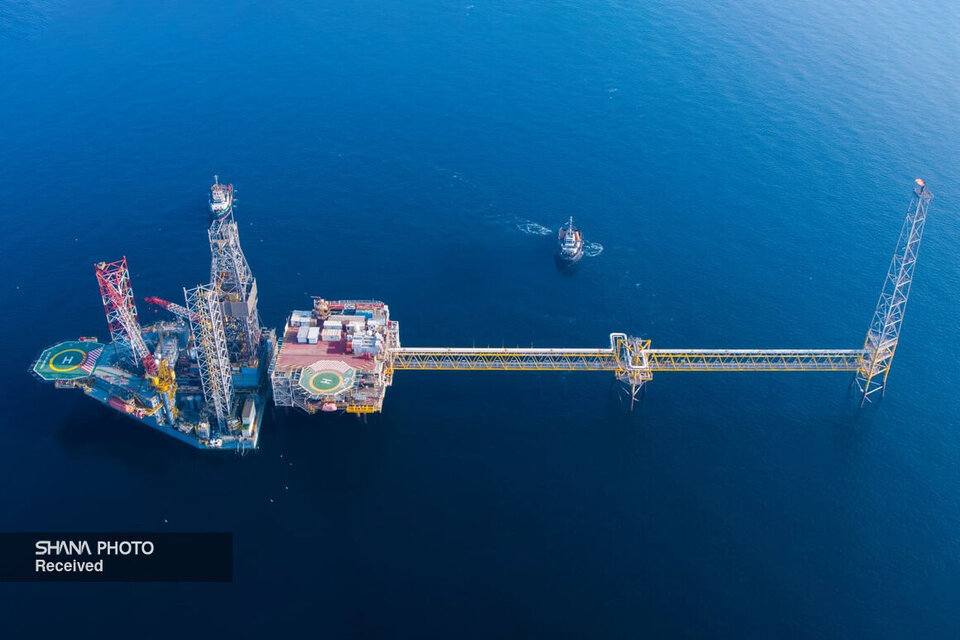
The role of the shared South Pars field in supplying the country's gas needs remains key and decisive; figures indicate about 70% of required gas is supplied through South Pars. Given this field's strategic position and competition for maximum extraction, maintaining and increasing extraction from South Pars is a necessity. In this regard, through a series of measures implemented by the 14th government, extraction from this shared field has reached about 727 million cubic meters per day, which is unparalleled compared to previous years.
Accordingly, through the relentless efforts of Pars Oil and Gas Company personnel over the past 15 months, 13 new wells have been drilled in the South Pars field, adding about 25 million cubic meters per day to the country's raw gas extraction. This is while, according to available statistics, in the three years leading up to the 14th government, only 11 million cubic meters had been added to this field's production.
Also, according to Oil Minister Mohsen Paknejad, based on implemented plans, it is predicted that by the end of this year about four more new wells as part of an infill drilling plan will become operational, which, including these wells, will bring the total increase in extraction from South Pars to about 30 million cubic meters per day.
Pressure Enhancement on the Agenda
Despite numerous record-breaking increases in extraction from South Pars, as this field has reached the second half of its lifespan, concerns about its gradual production decline in the coming years have increased. In this regard, the 14th government has also placed the South Pars gas field pressure enhancement plan on its agenda, and basic and advanced studies for pressure enhancement hubs have now been conducted.
Additionally, the contract for the first pressure enhancement hub with Petropars Company in the form of Phase 11 as an IPC contract, and contracts for hubs two to seven with Iranian companies as EPCI contracts, have been signed. However, securing necessary capital to begin operational work on this vital project is an undeniable necessity.
In addition to these, "construction, load-out, and installation of the jacket for the shared Balal gas field and commencement of development well drilling in this field," "daily capacity building of 20 million cubic meters of gas in the Kish gas field with the completion of the tenth well," "contractor selection, workshop setup for jacket construction, and shipment of some main jacket items to Iran for the Farzad gas field development," and "securing credit and obtaining permits to sign contracts for platform construction, installation, and first-phase drilling for North Pars gas field development" are among other notable measures in increasing gas production capacity within the operational scope of Pars Oil and Gas Company since the beginning of the 14th government's activity.
ICOFCl and Increased Gas Production
On the other hand, the Iranian Central Oil Fields Company, by employing maximum capacity and implementing production programs, covers part of the country's gas needs under these conditions. Accordingly, this company's gas production has reached 240 million cubic meters. Among the most notable measures taken in the Central Fields Company is the commissioning of several gas wells, which added over 10 million cubic meters to the country's raw gas production.
"Making a new well in the Dalan field operational with a production of 1 million and 400,000 cubic meters per day," "commissioning the Day gas field with three wells and achieving production of 3 million cubic meters per day," "making a new well in the Mozduran field operational and increasing production by 1 million and 600,000 cubic meters," and "commissioning well number 14 and completing major overhauls of process equipment in the Tang-Bijar field and achieving production of 7 million cubic meters" are among these measures.
In addition, "commissioning the Dehloran pressure boosting station" and "pre-commissioning of the 3100 Gas and LPG Plant" have been other notable activities within the operational scope of the Central Oil Fields Company in increasing and maintaining gas production since the beginning of the 14th government's activity.
Increased Associated Petroleum Gas Recovery
The National Iranian South Oil Company, as the largest subsidiary of the National Iranian Oil Company, in addition to producing about 75% of Iran's crude oil, supplies about 10% of the country's gas needs. A significant portion of this produced gas comes from recovering flare gas or associated petroleum gas, which, in addition to economic benefits, reduces environmental challenges. According to Mohammad Mansouri, the company's production manager, total gas production from independent and associated fields increased from 99 million cubic meters per day in 1403 (2024-2025) to 107 million cubic meters per day.
Accordingly, the average gas flaring in 1403 in fields covered by the National Iranian South Oil Company was about 27 million cubic meters per day, which has now reached 22 million and 200,000 cubic meters. This amount is scheduled to reach about 8 million and 600,000 cubic meters by the end of 1405 (2026-2027) and about 4 million and 500,000 cubic meters per day by the end of 1406 (2027-2028). Although achieving absolute zero flaring is not operationally or technically feasible, with the completion of major ongoing projects, it is expected this figure will be even lower than the set target.
"Making two injection wells of the 1000 Gas and LPG Plant operational" and "implementing short-term projects in flare gas recovery by utilizing private sector capacity in some fields" are among the most notable measures in increasing gas production capacity within the operational scope of the National Iranian South Oil Company. Of course, in addition to implementing large national flare gas recovery plans by "Bid Boland Persian Gulf Gas Refinery," "Marun Petrochemical," and their completion in the coming years, plans for flare optimization projects, as well as implementing auction plans for flare gas recovery in remote areas with investments by knowledge-based and private sector companies, are underway, which will enhance the National Iranian South Oil Company's capability for gas production and flare gas recovery in the near future.
20% Increase in Gas Storage
This year, a new record has also been set in gas storage, with the accumulated gas volume in the Sarajeh and Shourijeh reservoirs increasing by about 20% compared to last year. This allowed gas withdrawal from these reservoirs, especially Shourijeh, to increase significantly this year.
In mid-autumn this year (Monday, Aban 19/November 10), Mohsen Paknejad, in a session reviewing the implementation of the Seventh Five-Year Development Plan law in the open session of the Islamic Consultative Assembly, referring to the Ministry of Petroleum's duty regarding increasing natural gas storage capacity according to Article 44 of the Seventh Development Plan law, said: The current withdrawal capacity from Sarajeh and Shourijeh reservoirs in the cold season is equivalent to 30 million cubic meters per day, which, God willing, with the second phase of Sarajeh and Shourijeh coming online, this capacity will reach 55 million cubic meters per day by the end of the third year of the plan.
A look at the Ministry of Petroleum's performance in raw gas production since the beginning of the 14th government indicates a cohesive, determined, and plan-based movement. This narrative, beyond registering unprecedented numerical records, embodies the national will for maximum utilization of existing capacities and paints a confident outlook for sustainable energy supply. Of course, this approach yields results when, simultaneously, consumption optimization in various sectors is seriously placed on the agenda so that this divine blessing can be used in the best possible way for the development of our beloved Iran.
Your Comment