
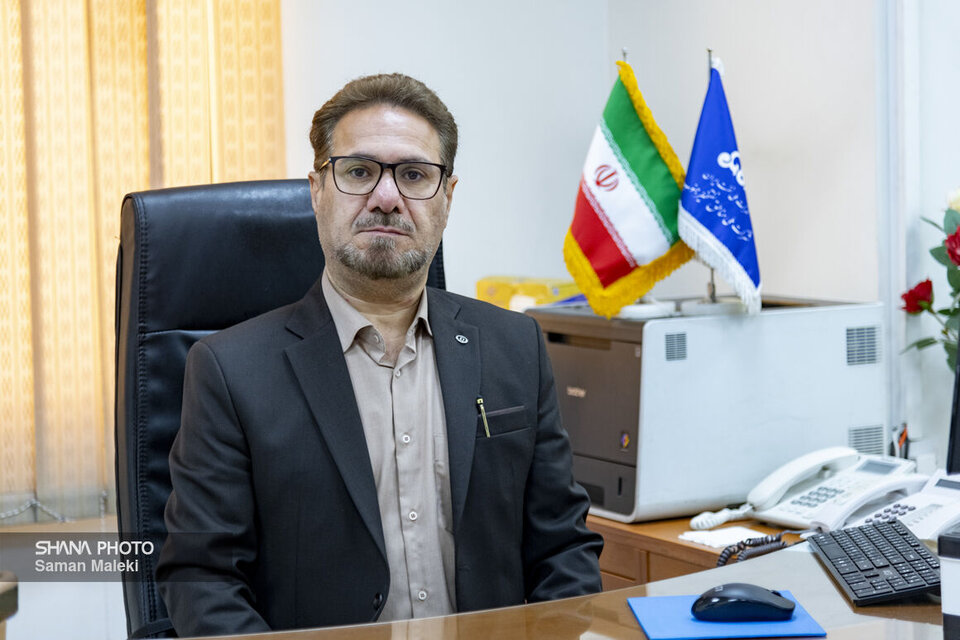
Rahim Silavi told Shana that the number of research projects at the company has increased about 2.5 times in the past five years, while their total financial value has grown more than elevenfold, reflecting a major expansion of research and innovation activities.
Silavi said NISOC’s research and technology department pursues multiple tracks, including applied research projects, graduate-level theses, academic sabbaticals, faculty research grants and so-called “first-of-a-kind production” projects. The latter are aimed at supporting knowledge-based firms and localizing the production of equipment, tools and software needed by the oil industry.
He said about 40 active research projects worth 263 billion rials are currently underway. Another 10 projects valued at about 22 billion rials have been completed, while 11 projects worth 77 billion rials have reached the contract-signing stage. In addition, nine projects valued at 181 billion rials have completed all administrative steps and are close to contract execution.
Graduate theses as a key research backbone
Silavi described first-of-a-kind production as one of the most important pillars of the company’s research efforts. He said 19 such projects worth about 3.5 trillion rials are currently being implemented. Five completed projects valued at 440 billion rials have already resulted in the first domestic production of goods, equipment or software. Another five projects worth 3.2 trillion rials have received approval to sign contracts from the vice presidency for science and technology, while 11 more are awaiting permits.
He added that in recent years, about 1,600 master’s and doctoral theses have been carried out with NISOC’s financial and institutional support. This year alone, 141 graduate projects are active and 34 have been completed.
Silavi said funding for these projects does not yet match their importance, noting that many research and first-of-a-kind production projects originate from graduate theses. He called for increased financial support to strengthen universities’ motivation for deeper engagement.
Nearly 90% of projects tied directly to oil and gas output
Silavi said about 89% of research projects are directly related to oil and gas production, covering both subsurface areas such as wells and reservoirs and surface facilities such as installations and pipelines. These projects, he said, directly contribute to increasing and sustaining production. The remaining 11% focus on production support areas, including safety, environmental protection and human resources.
He said the growth in research activity has been particularly pronounced over the past 18 to 24 months, especially under the current administration, with some areas seeing three- to fourfold growth, notably in first-of-a-kind production.
Aging infrastructure, human capital among key challenges
Silavi said one of the main technological challenges in southern oil fields is boosting oil recovery from reservoirs, prompting projects on enhanced oil recovery methods and the injection of water and non-hydrocarbon gases. Optimizing well production through advanced completion and stimulation technologies is another priority.
He said the average age of processing facilities and pipelines in southern regions exceeds 50 years, posing a serious challenge that has been factored into research planning.
Human resources are another concern, Silavi said, noting that the departure of experienced specialists in recent years has underscored the need for projects focused on workforce analysis, motivation and retention.
Localization from gas turbines to downhole equipment
Silavi said many research and first-of-a-kind production projects have improved productivity, cut costs and reduced operational risks. He cited localization projects at surface facilities that have lowered oil processing costs and reduced gas flaring.
Among notable achievements, he pointed to the localization and construction of three Solar Centaur 4500 gas turbines installed at the Marun pressure-boosting facility, development of compressor blade coatings for Rolls-Royce gas turbines, and the design of equipment for gas dehydration and liquid recovery. Other projects include seamless flowline pipes, non-metallic GRE pipes, and environmentally compatible chemical formulations.
In the well sector, he cited the development of chemicals to control sand production, foams to lift accumulated liquids, localized downhole motors, high-temperature and high-pressure drilling polymers, mobile nitrogen generation and injection units, artificial lift valves, and 15,000-psi well completion strings.
Artificial intelligence for smart field management
Silavi said NISOC has significantly expanded its use of artificial intelligence over the past year, defining around 10 AI-based research projects and 11 faculty-led research grants that are underway or nearing contract finalization. These projects focus on smart monitoring dashboards, production optimization, data analytics and equipment performance analysis.
One flagship initiative, known as WRFM, involves monitoring and optimizing oil and gas production using data analytics and smart algorithms. The project covers six major oil fields in southern Iran and integrates surface and subsurface data to forecast field performance and recommend optimal production strategies.
Academic, international cooperation
Silavi said about 70% of university-led projects involve cooperation with foreign professors or advisers. First-of-a-kind production projects also typically engage with foreign companies to facilitate technology transfer and localization, with a stronger emphasis on know-how development than on direct foreign investment.
He said NISOC has implemented or is implementing 39 projects with the Research Institute of Petroleum Industry and 37 projects with the Petroleum University of Technology, adding that plans are in place to further deepen these collaborations.
In environmental areas, he cited projects on associated gas recovery, gas sweetening, drilling fluid optimization, surface water collection, contaminated soil management and the development of environmentally friendly chemicals.
Silavi said preliminary estimates show that first-of-a-kind production projects could generate foreign currency savings of about 272 million euros.
Looking ahead
Silavi said future plans include leveraging national legislation supporting knowledge-based growth, using tax credit mechanisms, requiring technology annexes for major projects, expanding pilot and field-testing initiatives, and aligning research projects more closely with organizational goals.
“The ultimate objective is to optimize oil and gas production and raise field productivity,” he said, adding that expanded localization efforts and the use of artificial intelligence and advanced technologies are expected to drive a major leap in research and innovation in the southern oil fields in the coming years.
Your Comment