
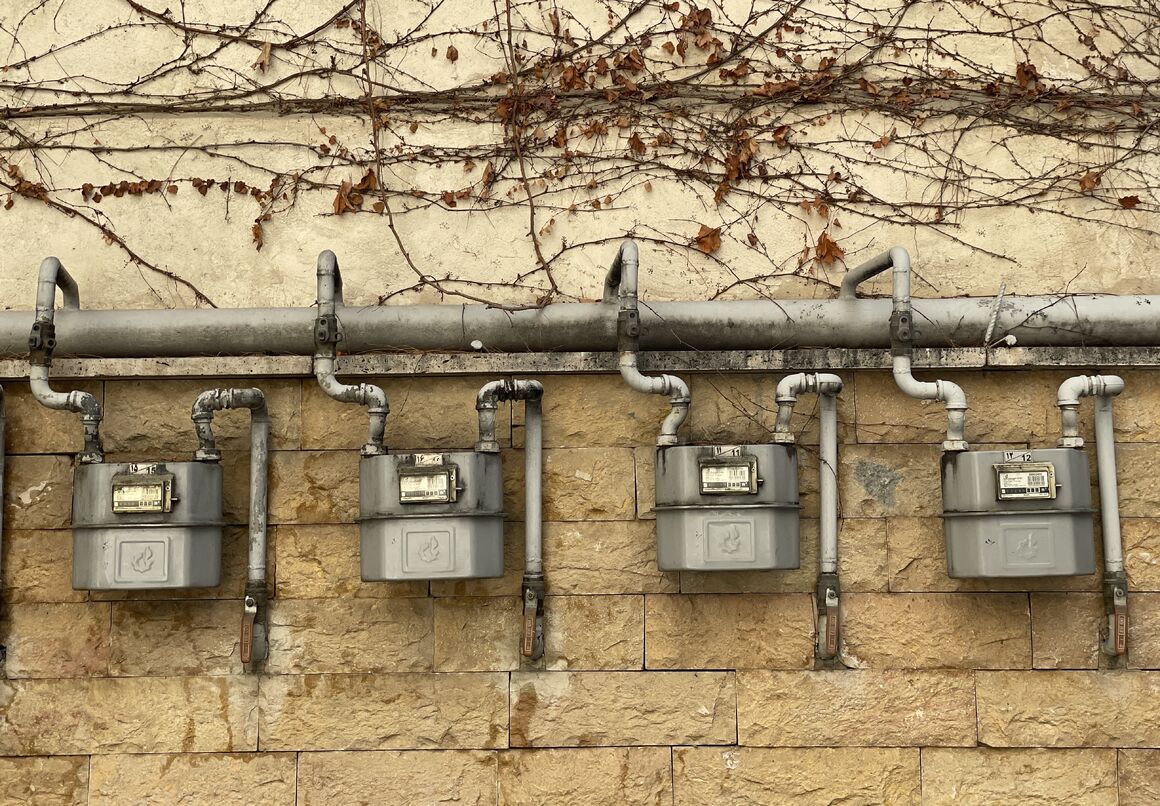
Speaking Saturday on the "On the News Line" program, Houshang Seydali noted that the country has about 1,300 cities. He said each has its own climate, and that its climate classification is determined by its consumption volume over the previous five years. Gas consumption is naturally higher in cold regions and lower in warm ones, which is why each city's five-year average serves as the basis for its consumption pattern.
He added that, under this pattern, gas consumption is divided into four tiers: up to 50 percent of the pattern falls in the first tier, up to 75 percent in the second, up to 95 percent in the third, and anything above that in the fourth. The pattern was introduced last year, and the same four-tier model is being used for calculations this year.
The NIGC Gas Distribution Coordination manager said each city's consumption is compared against the same period last year. For example, a city's gas consumption this Azar (November 22–December 21) is compared with its consumption in Azar last year to determine the amount of savings or increased use. The comparison is made for every region, province, and county, and the consumption pattern is set accordingly.
Pointing to the effect of temperature on gas use, Seydali said consumption rises as the weather gets colder and falls as it warms. This year, consumption rose in Aban (October 23–November 21) because of cold weather but dropped at the start of Azar as temperatures eased somewhat.
He continued that a cold air mass will enter the country again from the end of this week, and gas consumption will therefore rise sharply. Subscribers must be careful and use gas efficiently, he said. Given production conditions and the fact that part of last year's gas capacity was lost, optimizing consumption is the best step available now to make up for the lost gas.
How Costs Are Calculated Across the Four Tiers
Explaining how subscribers' gas costs are calculated, the NIGC manager said the consumption threshold for each of the four tiers is defined, and the cost is calculated at the price set for that tier. Prices in the first and second tiers are normally lower, and those in the third and fourth are higher.
Seydali added that any portion of a subscriber's consumption that falls into the next tier is charged at that tier's price. A subscriber with high consumption will therefore pay a far higher price for the portion that falls in the third and fourth tiers than for the first.
Stressing the need for subscribers to observe the consumption pattern, he said NIGC advises them to consider two points. First, given the country's conditions and the energy imbalance, they should help ensure stable gas supply nationwide so that no area faces gas outages. Second, higher consumption means paying more for gas.
Managing Consumption to Avoid Industrial Restrictions
Responding to a question on when household gas might be cut, the NIGC official said the country has faced an energy imbalance for several years and restrictions have been imposed in past years. A large share of the country's energy basket depends on gas. Beyond meeting heating and cooking needs, most of the electricity people consume is generated by gas-fired power plants.
Seydali continued that a balance must therefore be struck between the volume of gas allocated to heating and that supplied to power plants. Under current conditions, he said, power plants cannot be left without gas, so consumption has to be managed.
Highlighting the importance of public cooperation during the cold months, he said peak gas consumption normally runs from December 6 to February 4 (15 Azar to 15 Bahman). If people cooperate during this period and follow the consumption pattern, more gas can be made available to power plants, and the gas needed by steel, petrochemical, and other industries can be supplied.
The NIGC manager stressed that the more household gas consumption rises, the more restrictions will have to be placed on industry.
Referring to last year's consumption, Seydali said that on cold days last year, consumption in the household, commercial, and small-industry sectors reached about 737 million cubic meters. If consumption stays at that level this year, he said, no industry will be immune from restrictions.
Public Cooperation Is the Condition for Stable Winter Supply
Emphasizing the need to manage household gas consumption, he said that if subscribers nationwide can cut their gas use by about 20 percent compared with last year, there will be no particular problem supplying the household sector this year and restrictions on industry can be avoided.
Citing the president's emphasis that industry should be last in line for gas restrictions, the NIGC official added that most gas consumption on cold winter days goes to household heating, and that public cooperation in managing consumption can help ensure stable supply to all sectors.
Seydali said the country's gas capacity has fallen by more than 20 percent. This year is different from previous years, he said, and if the necessary savings are not made, particularly in the household sector, serious gas supply problems are possible.
Referring to the northern provinces, he said three northern provinces face more serious supply difficulties, and in eight other provinces some consumption axes will face restrictions. He therefore expects all subscribers nationwide to help the country get through the winter by managing their consumption.
Simple Ways to Reduce Household Gas Use
Pointing to ways of cutting household gas use, the NIGC official said that using suitable windows, sealing air leaks around window frames, wearing warm clothing, and using thick curtains during the winter months are all effective measures.
Seydali added that on sunny days it is best to open the curtains so that some of the sun's energy helps warm the inside of the home. These are among the measures that can make a real difference in energy consumption.
Stressing the importance of servicing heating equipment, he said servicing heaters and combi boilers (packages) matters greatly. Combi boiler temperatures should be kept between 50 and 60 degrees Celsius, and on warmer days they can even be set lower.
The NIGC official continued that insulating standing water heaters also has a significant effect on reducing gas use. He also advised against placing water heaters outdoors, since this increases gas consumption.
Awareness Campaigns in 31 Provinces to Promote Efficient Gas Use
Asked about NIGC's educational programs to familiarize people with consumption management methods, Seydali said the company's public relations department runs extensive programs and pursues public awareness through various channels in all 31 provinces.
He added that provincial gas companies, in coordination with public relations, have special awareness programs in their provinces. The use of the Basij's capacities has been stepped up in this area and is showing results.
Pointing to the use of advertising and community channels, the NIGC official said billboards and the distribution of informational brochures are among the measures being pursued. In addition, he said, the company draws on evening community gatherings and people's presence in public squares to spread awareness and promote a culture of efficient consumption. Provinces have taken suitable measures in this area, and NIGC's public relations department is following up on these programs.
The Role of Energy Operators in Managing Consumption
On the role of energy-sector companies in consumption management, Seydali said one capacity NIGC has put to use this year, and which is playing an effective role, is "energy operators" (karvars). These are a new capacity that can help subscribers optimize their energy use.
Describing their activity, he said some companies have entered the field as intermediaries between NIGC and subscribers. They are given subscribers' consumption data and, based on it, inspect homes and consumption conditions, offering guidance along with energy-saving plans.
On how subscribers are informed and how they can access consumption-management services, the NIGC official said the company has set up two websites. The first is my.nigc.ir, where subscribers can view their previous bills and gas consumption trends.
Seydali continued that the other site, karvar.nigc.ir, is dedicated to companies working in energy optimization. These companies take on everything from optimizing boiler rooms to smaller-scale measures and even culture-building activities around energy use. He said he hopes this capacity will have a suitable impact and that its effects will become more visible in the coming years.
Cracking Down on Unauthorized Gas Use in Villas and Open Spaces
Asked how unusual gas use is identified and handled, such as keeping villas in resort areas heated all week, or using household gas to heat swimming pool water or the open-air areas of restaurants, he said there are two types of dwellings. Permanent residences are those where people live continuously and use energy, and non-permanent ones are those where energy use is occasional.
The NIGC official added that, unfortunately, in past years some people kept the heating equipment in their villas on from the start of the week to the end so the interior would be warm when they arrived on Thursdays and Fridays. NIGC began cracking down on this last year and cuts the gas to such units, since they have no right to use gas this way.
Noting that these measures are continuing, Seydali said the process began again this year. Some of these units have not yet been fully identified and cut off, but NIGC staff in all provinces are inspecting them and disconnecting their gas.
On the use of patio heaters, he said their use in open spaces is banned and there is a regulation covering the matter. Anyone seen using a patio heater outdoors will face serious action.
Your Comment