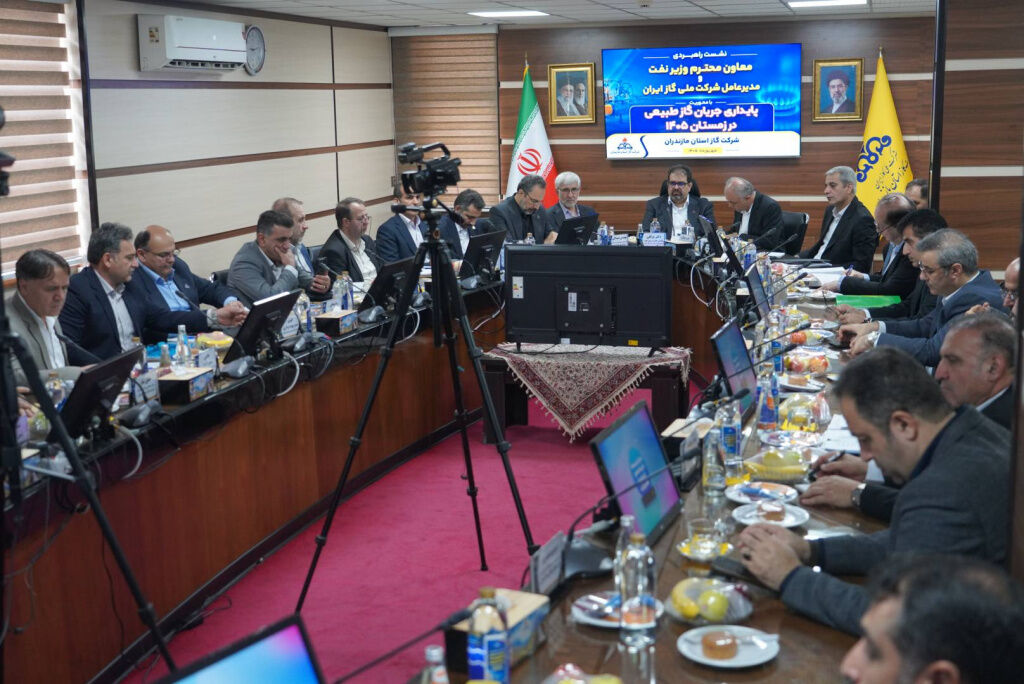
Speaking Tuesday, at a strategic meeting on maintaining gas flows during winter, Saeed Tavakoli discussed damage caused by attacks on South Pars facilities.
Despite a 13% to 14% decline in gas deliveries to the national network compared with the same period last year, the share of gas supplied to power plants remained at about 85% to 86%, in line with last year's level, Tavakoli said. As a result, power plants increased their diesel fuel stocks.
At the same time, he said, there were no widespread restrictions on industries, while gas deliveries to small industries and businesses increased by more than 1 billion cubic meters compared with 2025.
The incident demonstrated that a stable network depends on identifying problems, preparing for crises and making decisions before emergencies occur, Tavakoli said. All parts of the energy supply chain must operate with a unified, national approach, he said.
Energy War Underscores Need for National Approach
Tavakoli described the recent conflict as an "energy war," saying the gas network can no longer be managed on a provincial or sector-by-sector basis.
"Every point on this network is connected to another, and a small disruption can create a domino effect," he said.
The National Iranian Gas Co. and the broader energy supply chain should therefore be viewed as an integrated and coordinated system, with a national, problem-oriented approach replacing fragmented decision-making, Tavakoli said.
Managing the consequences of disruptions and maintaining the stability of the country's gas network requires treating all components as parts of a single, integrated system, he said, adding that maintaining public confidence is a key measure of calm during a crisis.
Tavakoli identified reconstruction and debris removal, consumption management and efficiency, and energy diplomacy as the three main priorities following the incident.
The experience should be turned into an operational plan, he said, with bottlenecks, critical points and actual problems in provinces — particularly in northern provinces and areas facing gas shortages — identified before the cold season. Specific solutions, responsibilities, timelines and operational scenarios should then be established for each issue, he said.
Preparing for the Coming Winter
Tavakoli stressed the need to prepare for the coming winter by focusing on the network's actual vulnerabilities: where problems could emerge, when capacity could come under pressure and what action should be taken under each scenario.
"We must be ready for game day from today," he said, emphasizing the need to practice responses in advance rather than seek solutions after a crisis begins.
Iran's gas network spans about 480,000 kilometers of distribution pipelines and more than 41,000 kilometers of transmission pipelines, along with hundreds of turbo-compressor units and gas processing facilities, Tavakoli said.
The network is not a static, linear system, he said, but a dynamic, living system whose stability depends on decisions and performance across all of its components.
The deputy oil minister for gas affairs also called for lessons from previous years to be incorporated into regulations, high-level policy documents and operational guidelines. The same approach should be applied at the provincial level so that every problem is identified and addressed before it develops into a crisis, he said.
Tavakoli said a 10% to 15% reduction in consumption alone may not be enough to cope with difficult winter conditions. He urged provincial officials to assess their networks carefully, identify potential scenarios and critical points, and submit operational plans for maintaining stable gas supplies throughout the winter.
He reiterated that maintaining gas flows during winter, particularly in northern provinces, requires early identification of network vulnerabilities, a focus on critical points, operational scenarios and clear decisions and actions for every identified problem.
Tavakoli thanked gas industry workers and the public for their cooperation, saying the public is the main pillar supporting network stability.
"People's concerns must not be allowed to grow," he said. "Our goal must be one shared approach: Through cooperation, preparedness and timely action, we should get through the winter with dignity and honor."
The strategic meeting on maintaining gas flows during winter was held at the Mazandaran Gas Co. with senior officials and the CEOs of the gas companies in Mazandaran, Golestan and North Khorasan provinces, as well as officials from Iran's Gas Transmission Operations District 9.
If you want, I can also make this tighter and more news-agency-like (Reuters/AP wire style) while retaining all the key figures.
Your Comment